

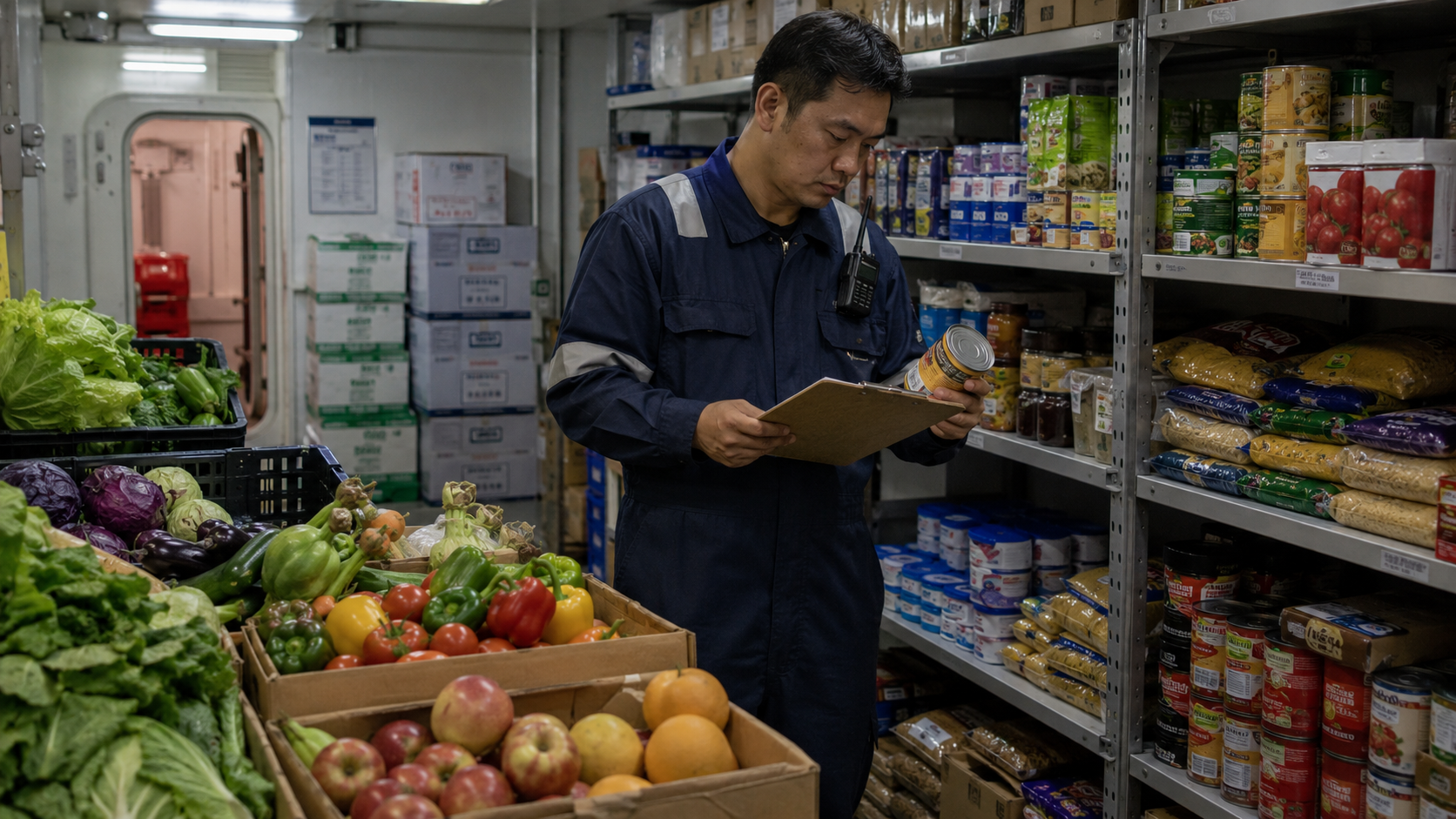
Specifying Requirements for Provisions: Quantity, Quality and Cultural Considerations
Provision supply is one of the most visible parts of vessel operations. It affects crew welfare, onboard morale, food safety, inspection readiness and day-to-day catering performance. But good provisions planning does not start with a shopping list. It starts with clear specifications.
For provisions buyers, catering officers and ship managers, specifying provisions requirements vessel means defining what the crew needs, how much is required, which quality level is acceptable, and which cultural, religious or dietary requirements must be respected.
A vague request such as “fresh vegetables,” “meat,” “rice” or “dairy products” can lead to inconsistent quotations and poor onboard satisfaction. A strong provisions specification should clarify quantity, grade, packaging, shelf life, storage condition, dietary restrictions, menu cycle and voyage duration.
AVS Global Ship Supply & Catering supports ship managers, vessel operators and procurement teams with provisions supply, on/offshore catering support, marine provisions and global ship supply coordination across international ports.
For provisions planning and vessel supply support, visit Provisions Supply, On & Offshore, read more about Marine Provisions or submit your request through Quick Quote.
From Crew List to Provisions Plan
A provisions plan should begin with the crew list. The number of people onboard, crew nationality, dietary restrictions, voyage duration and next port availability all affect what should be supplied.
A basic provisions request should not only state “supply for 20 crew.” It should explain who the food is for and how long the stock is expected to last.
Key Crew Data for Provisions Planning
Before creating a provisions list, buyers and catering officers should confirm:
- Number of crew onboard
- Expected crew changes
- Voyage duration
- Next supply port
- Crew nationalities
- Religious food requirements
- Vegetarian or vegan crew members
- Medical diets
- Allergy restrictions
- Preferred staple foods
- Galley storage capacity
- Freezer and chiller condition
- Existing onboard stock
This information helps avoid both under-supply and over-supply.
Why Crew Nationality Matters
A multinational crew may include different food habits, preferred grains, spices, protein choices and meal expectations. A crew list with Filipino, Indian, Turkish, Ukrainian, Indonesian, Greek or Chinese crew members may require different staples and menu balance.
For example:
- Rice may be a key daily staple for some crews.
- Lentils, beans and pulses may be important for vegetarian diets.
- Halal meat may be required for Muslim crew members.
- Pork-free alternatives may be needed.
- Some crews may prefer stronger spice profiles.
- Bread, potatoes, pasta or noodles may be primary carbohydrate sources depending on crew background.
The goal is not to create a different menu for every person, but to build a practical provisions plan that respects crew diversity.
From Stock List to Menu Cycle
A good provisions plan should connect stock levels to a menu cycle. Instead of buying random quantities, the catering officer should consider how the items will be used across breakfast, lunch, dinner and snacks.
A practical menu cycle may consider:
- Daily calorie needs
- Protein variety
- Fresh produce rotation
- Frozen backup stock
- Dry stores coverage
- Crew preferences
- Religious restrictions
- Long-voyage durability
- Emergency reserve
This approach makes provisions purchasing more predictable and reduces waste.
Quantity Norms: MLC 2006 and Standard Daily Allowances
MLC 2006 requires food and drinking water to be suitable in quantity, nutritional value, quality and variety, while also considering the duration and nature of the voyage and the cultural and religious backgrounds of seafarers.
For procurement teams, this means quantity planning should be more structured than simply ordering “enough food.” Buyers should understand daily consumption, voyage length, buffer stock and port availability.
What MLC 2006 Means in Practice
MLC 2006 does not provide one universal shopping list for every vessel. Instead, it sets a welfare and compliance expectation: seafarers must have adequate, varied and nutritious food and drinking water under hygienic conditions.
For provisions buyers, this means specifications should support:
- Adequate quantity
- Nutritional balance
- Food quality
- Menu variety
- Safe storage
- Hygienic preparation
- Cultural and religious suitability
- Regular onboard inspection
- Crew welfare
A compliant provisions plan should not be based only on cost. It should support crew health and operational continuity.
Daily Allowance per Crew Member
A daily allowance per crew member is a planning figure used to estimate how much food is required per person per day. It may be defined by company policy, vessel type, trade route, catering standard or client requirement.
A daily allowance can be expressed in:
- Monetary value per person per day
- Quantity of key food groups per person per day
- Menu cycle requirement
- Standard stock list per voyage
- Combination of budget and nutritional planning
For example, a ship manager may define daily allowance by crew count and voyage duration, then adjust for nationality mix, port availability and remaining onboard stock.
Quantity Calculation Formula
A simple provisions quantity calculation may start with:
Crew count × voyage days × daily allowance + safety margin
However, this formula should be adjusted for:
- Existing onboard inventory
- Next supply opportunity
- Weather delays
- Port congestion
- Crew change
- Storage capacity
- Shelf life
- Consumption history
- Special diets
- Seasonal availability
The safety margin should be practical. Too little stock creates welfare and operational risk. Too much stock increases spoilage, freezer load and waste.
Category-Based Quantity Planning
Provisions should be calculated by category, not only total budget.
Key categories may include:
- Fresh vegetables
- Fresh fruits
- Meat and poultry
- Seafood
- Dairy products
- Eggs
- Bread and bakery
- Rice, pasta and grains
- Pulses and legumes
- Frozen products
- Dry stores
- Beverages
- Spices and condiments
- Cleaning and galley consumables
Each category has a different consumption pattern and shelf-life profile.
Quality Specifications and Grade Definitions
Quantity alone does not make a good provisions order. Quality must also be specified clearly. If the buyer does not define quality, suppliers may quote different grades under the same item name.
For example, “apples,” “beef,” “rice” or “cheese” can represent many different grades, origins and price levels. Without specification, price comparison becomes unreliable.
What Should Be Included in Quality Specifications?
A strong quality specification may include:
- Product name
- Grade or class
- Origin preference
- Size range
- Packaging type
- Shelf life requirement
- Freshness standard
- Brand preference if required
- Fat ratio for meat
- Cut type
- Frozen or chilled condition
- Expiry date requirement
- Storage temperature
- Substitution rules
The more sensitive the item, the more precise the specification should be.
Fresh Produce Quality
Fresh fruits and vegetables should be specified by grade, freshness, size and intended use.
Useful details include:
- Grade or class
- Ripeness level
- Size count
- No visible damage
- No mold
- Suitable for voyage length
- Packaging suitable for ship storage
- Country of origin if required
- Delivery temperature where relevant
For long voyages, buyers should avoid requesting only ready-to-eat produce. A mix of ripe, semi-ripe and longer-lasting items may be needed.
Meat, Poultry and Seafood Quality
Protein items should be specified carefully because quality, food safety and crew satisfaction are closely linked.
Important details include:
- Fresh, chilled or frozen
- Cut type
- Bone-in or boneless
- Fat content
- Portion size
- Packaging
- Halal requirement where applicable
- Origin
- Production or expiry date
- Frozen temperature
- Veterinary or health documentation where required
If halal, kosher or other religious requirements apply, they should be stated clearly in the RFQ and purchase order.
Dairy Quality for Long Voyages
Dairy products require extra attention because shelf life, temperature control and packaging quality matter.
Buyers should specify:
- Product type
- Fat percentage
- UHT or fresh
- Chilled or ambient storage
- Expiry date minimum
- Packaging size
- Brand or grade preference
- Storage temperature
- Quantity based on consumption rate
For long voyages, UHT milk and longer-life dairy products may be more practical than fresh dairy, depending on crew preference and galley needs.
Cultural and Religious Considerations
Food is personal. Onboard, it becomes even more important because crew members live and work in a restricted environment for long periods. Cultural and religious food requirements should be included in provisions planning from the beginning.
A good provisions specification should respect crew diversity without making procurement unnecessarily complicated.
Halal Supply
Halal supply should be specified clearly when required. Buyers should not assume that “no pork” automatically means halal.
A halal specification may include:
- Halal-certified meat
- Halal poultry
- No pork products
- No pork-based ingredients
- Separate labeling where needed
- Supplier confirmation
- Certificate where required
- Avoidance of alcohol-based ingredients where relevant
If halal certification is required, this should be stated before quotation. The supplier should know whether halal preference is general or mandatory.
Kosher Supply
Kosher supply may require stricter sourcing and certification controls. Availability may vary significantly by port.
A kosher specification may include:
- Kosher-certified products
- Approved packaging
- Certification requirement
- Separation from non-kosher products where required
- Product origin
- Shelf-stable alternatives if fresh kosher items are unavailable
- Advance order planning
Kosher provisions should be planned earlier than general provisions because last-minute availability may be limited in many ports.
Pork-Free and Beef-Free Menus
Some crews may require pork-free or beef-free menu planning due to religious or cultural reasons. These requirements should be clearly listed.
Buyers should specify:
- No pork
- No pork derivatives
- No beef where required
- Alternative protein sources
- Separate labeling
- Menu planning notes for catering officer
Clear wording helps suppliers avoid accidental substitutions.
Multicultural Crew Menu Planning
Multicultural crew menu planning should balance variety and practicality.
A strong plan may include:
- Rice, noodles, pasta and potatoes
- Different protein options
- Vegetarian dishes
- Halal or pork-free items where required
- Familiar condiments and spices
- Regional staples
- Fresh and frozen balance
- Crew feedback history
- Rotating menu cycle
Crew satisfaction improves when meals reflect familiar food patterns, not only nutritional minimums.
Dietary Restrictions and Medical Diets
Dietary restrictions should be treated as operational requirements, not optional preferences. Allergies, medical diets and lifestyle diets can affect both crew welfare and onboard safety.
Allergies
Food allergies should be clearly communicated and documented. A provisions request should identify allergens where relevant and avoid vague descriptions.
Common allergens include:
- Nuts
- Shellfish
- Fish
- Eggs
- Milk
- Soy
- Wheat or gluten
- Sesame
If a crew member has a serious allergy, the catering officer should plan storage, labeling and preparation practices carefully.
Medical Diets
Medical diets may be required for crew members with conditions such as diabetes, hypertension, heart disease or digestive problems.
Provisions planning may need to include:
- Low-sugar products
- Low-salt items
- Whole grains
- Lean proteins
- Fresh vegetables
- Suitable snacks
- Sugar-free beverages
- Special dietary products where required
The buyer should not diagnose or prescribe a diet, but should support the vessel’s medical or company-approved requirements.
Vegetarian and Vegan Crew Members
Vegetarian and vegan provisions should be planned properly. Removing meat from a meal is not enough if the crew member needs balanced nutrition.
Useful items may include:
- Lentils
- Beans
- Chickpeas
- Tofu where available
- Plant-based protein products
- Nuts and seeds
- Whole grains
- Vegetables
- Fruits
- Dairy alternatives where available
- Vitamin-rich foods
Availability varies by port, so alternatives should be planned in advance.
Seasonality, Voyage Length and Port Availability
Provision supply changes by season, region and port. Items that are easy to source in one port may be expensive, low quality or unavailable in another.
A strong provisions specification should consider the voyage plan and local supply conditions.
Seasonality
Seasonality affects price, quality and availability of fresh produce, seafood and some dairy items.
For example:
- Some fruits may be lower quality outside season.
- Leafy vegetables may have shorter shelf life in hot climates.
- Seafood availability may vary by region.
- Imported items may cost significantly more in remote ports.
- Certain fresh products may be restricted by local rules.
Buyers should allow practical substitutions when exact items are unavailable, as long as quality and dietary requirements are respected.
Voyage Length
Voyage length affects the balance between fresh, frozen and dry stores.
Short voyages may rely more on fresh produce and chilled items. Long voyages need stronger planning for:
- Frozen proteins
- Dry stores
- Long-life dairy
- Root vegetables
- Durable fruits
- Canned products
- Pulses and grains
- Emergency reserve
- Water and beverages
For longer voyages, the buyer should specify minimum shelf life and storage condition clearly.
Port Availability
Not all fresh items are available in all ports. Remote ports, offshore bases, small islands and congested terminals may have limited supply options.
Before finalizing the provisions list, buyers should consider:
- Local market availability
- Import restrictions
- Cold chain capability
- Port delivery window
- Supplier coverage
- Quality consistency
- Customs or port health requirements
- Next supply port
AVS supports global provisions coordination across ports, helping buyers align vessel requirements with realistic local supply conditions.
Fresh vs Frozen Sourcing
Fresh items are important for crew welfare, but frozen products provide stability and backup.
A balanced provisions plan may include:
- Fresh produce for immediate consumption
- Frozen meat and seafood for longer storage
- Dry stores for daily staples
- UHT and long-life dairy
- Canned items for contingency
- Frozen vegetables where fresh availability is limited
The role of frozen products is not only cost control. It also supports continuity when port availability or weather disrupts fresh supply.
How AVS Supports Provisions Specification
AVS supports provisions buyers, catering officers and ship managers by helping turn crew requirements into clear supply specifications.
AVS can support:
- Crew-based provisions planning
- Multicultural menu planning
- Halal supply coordination
- Vegetarian and special diet requirements
- Fresh, frozen and dry provisions
- Quality specification review
- Port availability checks
- On/offshore catering support
- Marine provisions coordination
- Global ship supply
- Documentation and delivery planning
Clear specifications help suppliers quote accurately and help vessels receive food that matches the crew’s real needs.
For provisions requests, submit your inquiry through Quick Quote.
Conclusion: Good Provisions Start With Clear Requirements
Specifying vessel provisions is not only about quantity. It is about matching food supply to crew count, voyage length, storage capacity, quality expectations, cultural needs, religious requirements and port availability.
A strong provisions specification improves crew welfare, reduces waste, supports compliance and makes supplier quotations easier to compare.
For multinational crews, the best provisions plan is structured but practical. It respects dietary and cultural needs while keeping the menu workable for the galley team and realistic for the supply port.
AVS Global Ship Supply & Catering supports ship managers and procurement teams with provisions supply, marine provisions, on/offshore catering support and global ship supply coordination across international ports.
FAQ
What does MLC 2006 say about provisions?
MLC 2006 requires ships to provide food and drinking water of suitable quantity, nutritional value, quality and variety, taking into account the number of seafarers, the duration and nature of the voyage, and cultural and religious backgrounds.
How are provisions quantities calculated?
Provisions quantities are usually calculated using crew count, voyage duration, daily allowance, existing onboard stock, next supply opportunity and a practical safety margin.
What is a daily allowance per crew member?
A daily allowance per crew member is a planning figure used to estimate food requirements per person per day. It may be expressed as a budget, quantity standard or menu-based planning guideline.
How is halal supply specified?
Halal supply should be specified by stating whether halal-certified meat or poultry is required, whether pork and pork derivatives must be excluded, and whether halal certificates or supplier confirmation are needed.
How is kosher supply specified?
Kosher supply should specify kosher-certified products, packaging requirements, certification needs and acceptable alternatives. Because availability varies by port, kosher provisions should be planned early.
What about vegetarian or vegan crew members?
Vegetarian and vegan crew members should be supported with proper protein sources, grains, vegetables, fruits and suitable alternatives. Planning should avoid simply removing meat without replacing nutrition.
How does climate affect provisions planning?
Climate affects shelf life, storage, fresh produce quality and cold chain risk. Hot climates may require stronger cold chain control, durable produce choices and careful delivery timing.
Are fresh items always available in all ports?
No. Fresh item availability depends on port location, season, local market conditions, import restrictions, supplier coverage and delivery timing.
How does AVS handle multicultural crews?
AVS supports provisions planning by considering crew nationality, religious requirements, dietary restrictions, preferred staples and practical menu balance for multinational crews.
What inspection covers provisions quality?
Onboard inspections may review food and drinking water quantity, nutritional value, quality, variety, storage condition and hygiene practices. Company, flag or port state expectations may also apply.
How to specify dairy quality for long voyages?
Dairy quality should be specified by product type, UHT or fresh condition, fat percentage, expiry date, packaging size, storage temperature and minimum shelf-life requirement.
What is the role of frozen vs fresh sourcing?
Fresh sourcing supports crew welfare and menu quality, while frozen sourcing provides stability, longer shelf life and backup for long voyages or ports with limited fresh availability.