

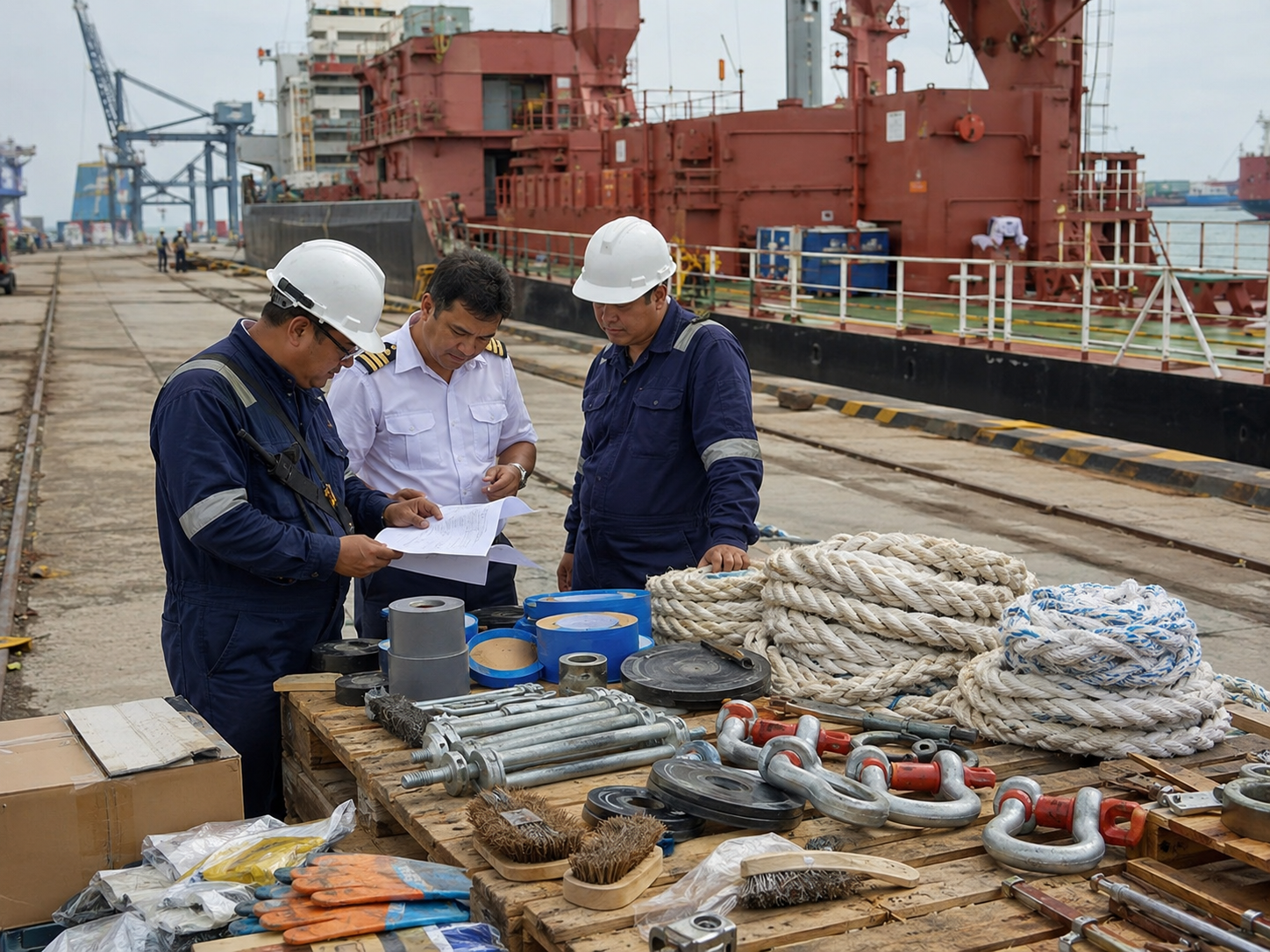
Deck Stores Procurement Checklist for Bulk Carriers, Tankers and Container Vessels
Deck stores are essential for safe cargo operations, mooring, maintenance, cleaning, lashing, cargo handling and daily deck department work. For procurement teams, technical superintendents and deck officers, a clear deck stores procurement checklist helps prevent wrong items, missing specifications, delayed approvals and repeated emergency orders.
Deck stores are not the same for every vessel. A bulk carrier may need hatch cover sealing items, hold cleaning tools and cargo hold equipment. A tanker may require cargo hose accessories, manifold tools, tank cleaning items and safety-related deck supplies. A container vessel may need twistlocks, lashing bars, bridge fittings and container securing consumables.
The best procurement approach is to build a vessel-type checklist, not a generic deck supply list. This allows buyers to match the order with the vessel’s deck arrangement, cargo profile, operational route and onboard maintenance practice.
AVS Global Ship Supply & Catering supports ship owners, ship managers, procurement teams, technical superintendents and deck officers with Technical Stores, deck stores, ropes, anchors, mooring equipment, lashing equipment, safety items and global ship supply coordination across international ports.
For related deck equipment topics, you can also review Marine Ropes and Marine Anchors. For deck stores RFQs, submit your requirement through Quick Quote.
What Counts as Deck Stores
Deck stores include consumables, tools, fittings, ropes, safety items and operational supplies used by the deck department. They support cargo work, mooring, maintenance, cleaning, securing, lifting support and general deck readiness.
A deck store list may include:
- Mooring ropes
- Heaving lines
- Shackles
- Turnbuckles
- Wire ropes
- Cargo hooks
- Lashing equipment
- Hatch cover sealing items
- Hold cleaning tools
- Deck brushes
- Scrapers
- Chipping hammers
- Paint brushes and rollers
- Tarpaulins
- Cargo nets
- Cargo hoses and accessories
- Manifold tools
- Safety tapes and warning signs
- Deck PPE
- Grease and lubricants
- Rust removers
- Deck maintenance consumables
- Anchoring and mooring accessories
Deck stores are often handled under technical procurement because many items require correct dimensions, material specifications, safe working load, compatibility checks or certification.
Deck Stores vs Technical Stores
Deck stores are usually part of the wider Technical Stores category. The difference is that deck stores are used mainly by the deck department, while technical stores may also include engine, electrical, hydraulic, safety and workshop supplies.
For example:
- Lashing bars are deck stores.
- Cargo hoses are deck-related technical supplies.
- Shackles and turnbuckles may be deck stores, but they may require technical approval.
- Mooring ropes are deck stores, but their size, construction and strength must match the vessel’s mooring plan.
- Anchoring accessories connect directly with deck equipment and should be checked against vessel requirements.
This is why procurement teams should not treat deck stores as simple consumables.
Why Vessel Type Matters
A bulk carrier, tanker and container vessel have different deck operations. The same general category may require different specifications.
For example:
- A bulk carrier needs hold cleaning and hatch cover sealing supplies.
- A tanker needs cargo hose accessories and manifold-related tools.
- A container vessel needs twistlocks, lashing bars and container securing equipment.
A vessel-type checklist helps buyers avoid generic RFQs and improves quotation accuracy.
Bulk Carrier Deck Stores: Hatch Covers, Hold Cleaning and Lashing
Bulk carriers require deck stores that support cargo hold preparation, hatch cover maintenance, cargo residue cleaning, mooring, lashing and safe deck operations. Because cargoes may vary between coal, grain, ore, fertilizer, cement, steel products or project cargo, deck store demand can change from voyage to voyage.
Hatch Cover Items
Hatch covers are critical for cargo protection. Water ingress can create cargo damage, claims and operational problems. Deck stores for hatch cover maintenance should be clearly specified.
Common hatch cover-related deck stores include:
- Hatch cover sealing tape
- Rubber packing
- Foam test materials
- Chalk test materials
- Grease
- Cleaning rags
- Scrapers
- Wire brushes
- Hatch wedge accessories
- Drain channel cleaning tools
- Rubber repair materials
- Tarpaulins where applicable
- Water-resistant sealing consumables
Hatch cover sealing tape is used to support temporary sealing and protection where appropriate. It should not be treated as a substitute for proper hatch cover maintenance, inspection and repair.
Hold Cleaning Supplies
Hold cleaning is one of the most important deck activities on bulk carriers. The required tools depend on previous cargo, next cargo, charterer instructions and hold condition.
Bulk carrier hold cleaning supplies may include:
- Long-handle brushes
- Scrapers
- Shovels
- Squeegees
- High-pressure cleaning accessories
- Cleaning chemicals where approved
- Rust removal tools
- Mops and buckets
- Waste bags
- Protective gloves
- Goggles
- Dust masks
- Portable lighting
- Hose connections
- Drying tools
Buyers should always clarify cargo residue type, cleaning method and next cargo sensitivity before ordering hold cleaning products.
Lashing and Cargo Securing
Bulk carriers may carry project cargo, steel products, pipes, logs, packaged cargo or deck cargo depending on vessel type and charter. Lashing equipment should be specified carefully because incorrect items can create safety risk and cargo damage.
Common items include:
- Shackles
- Turnbuckles
- Wire rope clips
- Lashing wires
- Chain blocks
- Cargo straps
- Ratchet lashings
- Dunnage materials
- Cargo nets
- Eye bolts where applicable
- Hooks and links
- Rubber mats
- Anti-slip materials
Safe working load, size, material, certification and end fitting type should be confirmed before purchasing.
Bulk Carrier RFQ Details
For bulk carrier deck stores, procurement teams should include:
- Vessel type
- Cargo history
- Next cargo if relevant
- Hatch cover type
- Hold size or number of holds
- Cleaning requirement
- Lashing requirement
- Required certificates
- Delivery port
- ETA and delivery window
- Urgency level
- Substitution rules
This gives suppliers enough information to quote suitable items.
Tanker Deck Stores: Cargo Hoses, Manifold Flanges and Tank Tools
Tankers require deck stores that support cargo handling, manifold operations, tank cleaning, mooring, spill response and deck safety. Product tankers, chemical tankers, oil tankers and bunker vessels may require different materials and compatibility checks.
Deck stores for tankers should be treated with higher specification discipline because cargo compatibility, pressure rating, safety and documentation are critical.
Cargo Hose and Hose Accessories
Cargo hoses must be selected based on cargo type, pressure, size, length, material compatibility and terminal requirements. A vague request such as “cargo hose” is not enough.
A tanker cargo hose RFQ should include:
- Hose service
- Cargo type or product group
- Hose diameter
- Hose length
- Working pressure
- Test pressure requirement
- End fitting type
- Flange standard
- Material compatibility
- Electrical continuity requirement where applicable
- Certificate requirement
- Date of manufacture requirement
- Quantity
- Packing method
- Delivery port
Cargo hose requirements may depend on company rules, terminal requirements, class expectations, cargo type and local regulations. Buyers should request supplier documentation and confirm compatibility before approval.
Manifold Flanges and Gaskets
Manifold-related items must match vessel and terminal connection requirements. Wrong flange size or gasket material can delay cargo operation.
Common tanker manifold items include:
- Manifold flanges
- Reducers
- Gaskets
- Nuts and bolts
- Blanks
- Drip trays
- Hose saddles
- Hose supports
- Bonding cables where applicable
- Spill trays
- Portable grounding accessories where required
Buyers should specify flange size, pressure class, material, gasket type and quantity. For chemical tankers, material compatibility becomes especially important.
Tank Cleaning Tools
Tank cleaning tools vary by cargo type and cleaning method.
Common tank cleaning deck stores include:
- Tank cleaning hoses
- Spray nozzles
- Portable tank cleaning tools
- Scrapers
- Squeegees
- Chemical-resistant gloves
- Chemical-resistant aprons
- Goggles
- Cleaning chemicals where approved
- Absorbent pads
- Waste bags
- Sampling bottles
- Measuring tapes
- Non-sparking tools where required
Tank cleaning items should be checked against safety, cargo compatibility and vessel procedures.
Safety and Pollution Prevention
Tankers often require additional attention to spill response and pollution prevention items. Depending on operation, buyers may request:
- Oil absorbent pads
- Absorbent booms
- Spill kits
- Drain covers
- Chemical absorbents
- Warning tapes
- Safety signs
- Non-sparking tools
- Chemical PPE
- Gas detection accessories where applicable
For wider compliance context, procurement teams may review MARPOL, SOLAS and IMO topics where relevant to cargo safety, pollution prevention and onboard safety management.
Container Vessel Deck Stores: Twistlocks, Lashing Bars and Bridges
Container vessels require deck stores that support container securing, lashing bridge work, deck maintenance, mooring and safe cargo operations. Because container securing arrangements are vessel-specific, procurement teams must be careful with dimensions, design and compatibility.
Twistlocks
Twistlocks are used to secure containers. They are not generic items. The buyer must confirm vessel type, container securing system, twistlock type and approval requirements.
Twistlock RFQ details may include:
- Manual or semi-automatic type
- Size and design
- Stack position use
- Manufacturer reference if known
- Compatibility with existing equipment
- Quantity
- Certification requirement
- Spare ratio
- Weight and packing details
- Delivery urgency
Wrong twistlocks can create serious operational and safety issues. Procurement should request deck officer or superintendent confirmation before approval.
Lashing Bars
Lashing bars are often vessel-specific because length, head type and securing arrangement may vary.
RFQ details should include:
- Lashing bar length
- End fitting type
- Vessel class or container securing system
- Manufacturer reference where available
- Quantity
- Condition required
- Certification where applicable
- Delivery port
- Compatibility with turnbuckles
A lashing bar should never be ordered only by a general description. Photos, measurements and previous supplier records can help reduce errors.
Turnbuckles, Bridge Fittings and Securing Accessories
Container vessel deck store lists may include:
- Turnbuckles
- Bridge fittings
- Base cones
- Stacking cones
- Container securing rods
- Lashing plates
- D-rings
- Hooks
- Shackles
- Securing pins
- Grease
- Storage racks
- Inspection tags
The procurement team should check the vessel’s container securing manual, onboard stock and superintendent guidance before confirming alternatives.
Container Vessel RFQ Details
For container vessel deck stores, buyers should include:
- Vessel name
- Container securing system
- Item photos where possible
- Existing item markings
- Measurements
- Manufacturer reference
- Required quantity
- Certificate requirement
- Delivery port
- ETA
- Urgency level
- Substitution approval process
This reduces the risk of incompatible securing items.
Common Deck Stores Across All Vessels
Although vessel types differ, many deck stores are common across bulk carriers, tankers and container vessels. These items support mooring, deck maintenance, cleaning, safety and daily work.
Mooring Ropes and Rope Accessories
Mooring ropes are critical deck items. They should be specified by size, length, material, construction and strength requirements.
A mooring rope RFQ should include:
- Rope diameter
- Rope length
- Material
- Construction
- Minimum breaking load
- Eye splice requirement
- Chafe protection
- Quantity
- Certificate requirement
- Delivery port
For more detail, see Marine Ropes.
Anchoring and Mooring Accessories
Deck stores may include anchoring and mooring accessories, especially when replacing worn or damaged equipment.
Common items include:
- Shackles
- Swivels
- Chain stoppers
- Chain hooks
- Mooring tails
- Chafing gear
- Buoys
- Fender accessories
- Chain accessories
- Turnbuckles
For related information, review Marine Anchors.
Deck Maintenance Supplies
Deck maintenance requires steady replenishment because vessels operate in harsh marine environments.
Common deck maintenance supplies include:
- Paint brushes
- Rollers
- Scrapers
- Chipping hammers
- Wire brushes
- Sandpaper
- Grinding discs
- Rust removers
- Grease
- Lubricants
- Rags
- Tape
- Marking paint
- Buckets
- Tarpaulins
- General hand tools
Buyers should clarify brand preference, size, material and intended use where relevant.
Deck PPE
Deck PPE may be managed under safety stores, technical stores or deck stores depending on company structure.
Deck PPE may include:
- Safety gloves
- Safety goggles
- Face shields
- Hard hats
- Safety shoes
- High-visibility vests
- Rainwear
- Chemical-resistant gloves
- Fall protection items
- Ear protection
- Dust masks
- Respiratory protection where required
For safety-related items, procurement teams should check certificate requirements and onboard safety procedures.
IMPA and ISSA References
Many deck store items can be referenced through marine purchasing catalog systems or supplier item codes. This can reduce confusion in repeat orders.
However, codes alone are not enough. Buyers should still specify dimensions, material, safe working load, compatibility and certificate requirements where relevant.
Useful industry references for marine purchasing terminology and ship supply practices include IMPA and ISSA.
Procurement Pitfalls and Reorder Patterns
Deck stores are frequently reordered because they are used in daily operations and cargo work. Procurement teams can reduce mistakes by identifying common reorder patterns and recurring pitfalls.
Common Procurement Pitfalls
Common deck stores procurement mistakes include:
- Ordering by generic description only
- Missing dimensions
- Missing material specification
- Ignoring vessel type
- Ignoring compatibility with existing equipment
- Not asking for certificates
- Accepting unapproved substitutes
- Not checking safe working load
- Missing delivery window
- Not checking port access requirements
- Not confirming storage or packing needs
- Reordering from old records without vessel confirmation
These issues often create urgent corrections, extra cost and operational delay.
Reorder Patterns by Vessel Type
Bulk carriers often reorder:
- Hold cleaning tools
- Hatch cover sealing items
- Tarpaulins
- Lashing materials
- Wire brushes
- Scrapers
- Shovels
- Deck maintenance consumables
Tankers often reorder:
- Gaskets
- Manifold bolts and nuts
- Hose accessories
- Absorbent pads
- Spill kits
- Chemical PPE
- Tank cleaning tools
- Non-sparking tools
Container vessels often reorder:
- Twistlocks
- Lashing bars
- Turnbuckles
- Bridge fittings
- Securing pins
- Grease
- Inspection tags
- Deck maintenance consumables
Tracking reorder history by vessel type helps buyers forecast demand and avoid last-minute sourcing.
How to Build a Practical Deck Stores RFQ
A strong deck stores RFQ should include:
- Vessel type
- Vessel name
- Port and ETA
- Delivery window
- Item description
- Quantity
- Dimensions
- Material
- Safe working load where relevant
- Certificate requirement
- Photos where useful
- Existing item markings
- Brand or maker reference if known
- Substitution rules
- Required documents
- Delivery instructions
- Urgency level
This structure helps suppliers quote accurately and reduces clarification cycles.
Documentation and Acceptance
Deck stores delivery should be supported by clear documentation.
Depending on item type, buyers may request:
- Quotation
- Purchase order
- Invoice
- Packing list
- Delivery note
- Certificate
- Test report
- Product datasheet
- Safety Data Sheet where applicable
- Photo before dispatch
- Proof of delivery
- Vessel stamp or signature
For technical or safety-related deck stores, documentation is as important as the product itself.
How AVS Supports Deck Stores Procurement
AVS supports procurement teams, technical superintendents and deck officers with deck stores sourcing, specification clarification, documentation support and vessel delivery coordination across international ports.
AVS can support:
- Bulk carrier deck stores
- Tanker deck supplies
- Container vessel deck stores
- Mooring ropes
- Lashing equipment
- Hatch cover items
- Hold cleaning tools
- Cargo hose accessories
- Manifold-related items
- Twistlocks and securing accessories
- Deck PPE
- Cleaning and maintenance consumables
- Technical stores
- Multi-port delivery coordination
- Urgent deck supply RFQs
- Documentation and proof of delivery
AVS helps buyers turn general deck store requests into clearer RFQs with vessel-specific details. This improves quotation accuracy, reduces unsuitable substitutions and supports safer vessel operations.
Conclusion: Deck Stores Should Be Bought by Vessel Type, Not by Generic List
Deck stores procurement works best when the buyer understands the vessel type, cargo operation and onboard use case. A bulk carrier, tanker and container vessel may all need deck supplies, but the critical items, specifications and risks are different.
Bulk carriers need strong focus on hatch covers, hold cleaning and cargo securing. Tankers require careful attention to cargo hoses, manifold accessories, tank tools and spill response items. Container vessels depend on accurate twistlocks, lashing bars, bridge fittings and securing equipment.
A practical deck stores checklist reduces wrong orders, improves technical approval, supports onboard readiness and helps procurement teams control cost across the fleet.
AVS Global Ship Supply & Catering supports ship owners, ship managers, procurement teams and technical superintendents with technical stores, deck stores and vessel-specific supply coordination across international ports.
For deck stores, ropes, lashing equipment, tanker deck supplies, container securing items or bulk carrier deck stores, submit your requirement through Quick Quote.
FAQ
What is included in deck stores?
Deck stores include ropes, lashing equipment, hatch cover items, hold cleaning tools, cargo hose accessories, mooring accessories, deck maintenance consumables, deck PPE, cleaning tools and general deck department supplies.
How often are deck stores replenished?
Replenishment depends on vessel type, cargo operation, route, deck maintenance schedule, onboard consumption and company policy. Bulk carriers, tankers and container vessels often have different reorder patterns.
Are lashing bars vessel-specific?
Yes. Lashing bars can be vessel-specific because length, end fitting, securing system and compatibility may vary. Buyers should confirm measurements, photos and vessel securing system before ordering.
What is hatch cover sealing tape?
Hatch cover sealing tape is a water-resistant sealing product used to support temporary hatch cover protection where appropriate. It should not replace proper hatch cover inspection, maintenance or repair.
How are twistlocks specified?
Twistlocks should be specified by type, design, compatibility, manufacturer reference if available, quantity, certificate requirement and vessel securing system. Photos and existing item markings help avoid errors.
Do tankers need specialized deck stores?
Yes. Tankers may need specialized cargo hose accessories, manifold flanges, gaskets, tank cleaning tools, spill response items, chemical PPE and non-sparking tools depending on cargo type and operation.
What deck PPE belongs here?
Deck PPE may include safety gloves, goggles, hard hats, safety shoes, high-visibility vests, rainwear, chemical-resistant gloves, fall protection items and respiratory protection where required.
How does AVS quote deck stores?
AVS reviews the vessel type, item description, dimensions, material, quantity, certificate requirement, delivery port and urgency level before preparing a deck stores quotation.
Are deck stores IMPA-coded?
Many deck stores can be referenced through IMPA-style catalog codes or marine purchasing references. However, buyers should still specify size, material, safe working load, compatibility and certification needs.
What about mooring ropes?
Mooring ropes should be specified by diameter, length, material, construction, minimum breaking load, eye splice requirement, chafe protection and certificate requirement.
What standards apply to cargo hoses?
Cargo hose requirements depend on cargo type, pressure, service, terminal rules, company procedures and applicable certification requirements. Buyers should request hose certificates, pressure test information and material compatibility confirmation.
Are deck stores affected by vessel age?
Yes. Older vessels may have different deck arrangements, worn fittings, legacy securing systems and non-standard replacement needs. Photos, measurements and onboard confirmation are especially important for older vessels.