
MARPOL is the International Convention for the Prevention of Pollution from Ships. Developed through the International Maritime Organization (IMO), it addresses pollution caused by routine ship operations and accidents through six technical annexes.
How AVS Global Ship Supply supports MARPOL-related purchasing
AVS Global Ship Supply coordinates global ship supply across 1,500+ ports in 126 countries. For garbage segregation supplies, waste-handling materials and cleaning products, send specifications, quantities, vessel details, delivery port and ETA. State the required safety data sheets, declarations and any applicable approvals. Have the vessel’s responsible team confirm product suitability before ordering. Our single-contract ship supply guide explains how to coordinate these requirements with other stores.
Key Historical Context
- The Convention was adopted in 1973 and modified by the 1978 Protocol, commonly described together as MARPOL 73/78.
- Annexes I and II entered into force on October 2, 1983; the other annexes followed on different dates.
- Applicable requirements depend on the annex, vessel characteristics, operation and other conditions in the regulations.
Why MARPOL Matters
MARPOL provides an international framework for ship pollution prevention. Deficiencies may result in enforcement action, including detention or fines under applicable law. Supply planning should support the vessel’s requirements without treating a purchase order or supplier statement as proof of full compliance.
MARPOL Structure: Annexes and Applicability

Breakdown of MARPOL Annexes
| Annex | Pollution type | Operational relevance |
|---|---|---|
| I | Oil | Oil pollution prevention arrangements and operations |
| II | Noxious liquid substances in bulk | Carriage of regulated bulk liquid substances |
| III | Harmful substances in packaged form | Carriage of regulated packaged substances |
| IV | Sewage | Sewage arrangements for ships within the annex’s scope |
| V | Garbage | Shipboard garbage handling and disposal |
| VI | Air pollution | Air emissions and applicable energy-efficiency requirements |
This table identifies subject areas; it is not a complete applicability checklist. For example, Annex IV applies to ships on international voyages of 400 gross tonnage and above, or certified to carry more than 15 persons. Its permitted sewage arrangements include alternatives; a treatment plant is not the only option.
Real-World Application of MARPOL in Ship Supply
Benefits of MARPOL-Aligned Supply Planning
- Clear requisitions: specify the material, intended use and required documents before requesting quotations.
- Consistent receiving checks: compare delivered products and documents with the accepted quotation.
- Practical waste handling: plan storage capacity and consumables around the voyage and intended landing arrangements.
Common Equipment for MARPOL Compliance
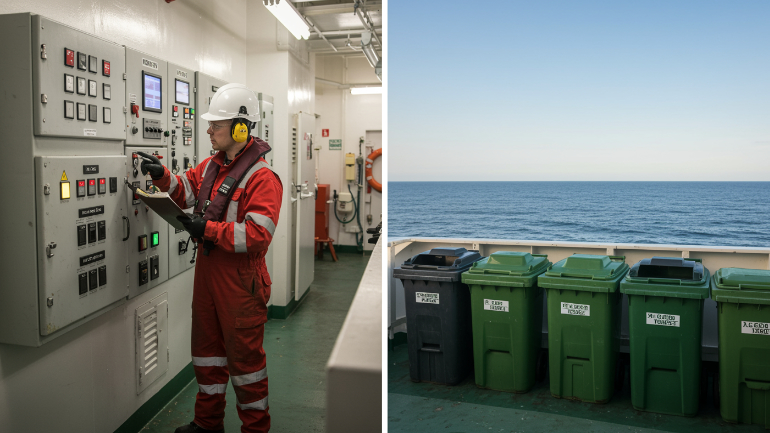
Equipment and materials should match the vessel’s arrangements and applicable requirements. Not every ship must carry every system below:
- Oily-water separators and related spares for applicable oil pollution prevention arrangements.
- Sewage handling equipment and spares appropriate to the vessel’s system.
- Garbage collection containers, suitable bags, identification materials and, where fitted, compactors or shredders.
- Emission monitoring or exhaust gas cleaning equipment where applicable to the vessel’s compliance method.
- Required placards, Oil Record Books and Garbage Record Books, as applicable.
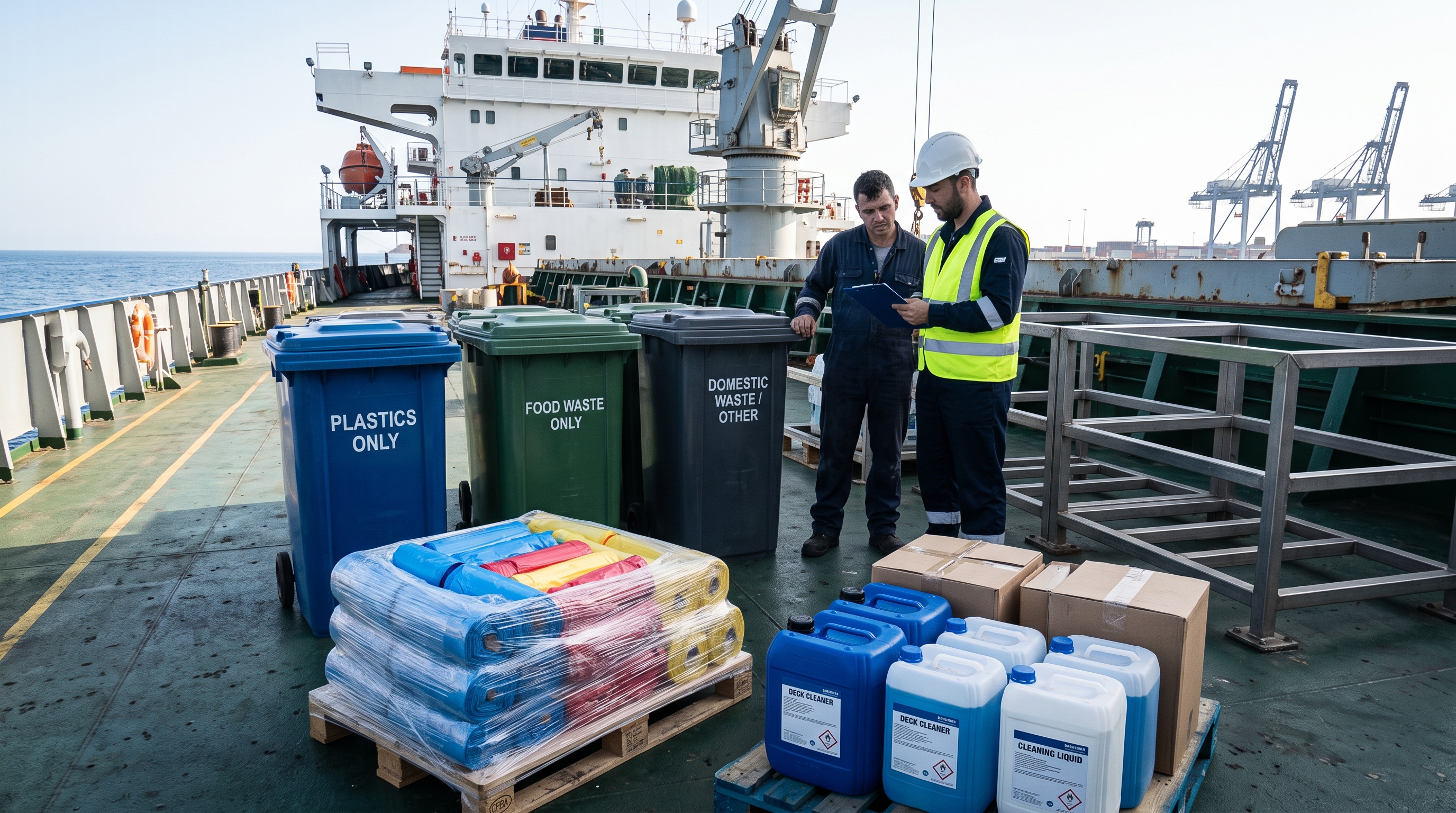
For MARPOL Annex V garbage management, align the requisition with onboard collection, segregation, storage and disposal procedures. Confirm container dimensions, lid arrangements, securing, material compatibility and the intended waste stream. Do not assume a particular bin color has the same meaning on every vessel or at every port.
Cleaning products and documentation: the IMO Annex V implementation guidelines address cleaning agents and additives in relevant washwater. Keep evidence that the product meets the criteria for not being harmful to the marine environment (HME). The guidance recognizes a dated, signed supplier statement, either within a safety data sheet (SDS) or as a separate document. Request any approval required for the specific application as well. A “MARPOL approved” label alone does not replace this review or authorize a discharge.
Compliance Scenarios
Scenario 1: Bulk Carrier Operating in an Emission Control Area (ECA)
Check the applicable emissions requirements for the vessel and route. For example, the Mediterranean SOx ECA sulfur limit took effect on May 1, 2025: 0.10% m/m, compared with 0.50% outside SOx ECAs. The responsible technical team should determine the compliant fuel or approved equivalent arrangement and the necessary records. Check local restrictions before relying on exhaust gas cleaning equipment.
Scenario 2: Cruise Vessel at a Caribbean Port
Plan sewage arrangements under the applicable Annex IV provisions and handle garbage under Annex V. Before landing waste, confirm the port reception facility’s accepted waste categories, packaging, notification and documentation requirements with the agent or service provider. Supplying collection materials and arranging waste reception are separate tasks; each needs a clear responsible party.
Challenges and Strategic Best Practices
Implementation Challenges
- Document control: a product’s identity must match the documents supplied with it.
- Local requirements: ports and reception facilities may have specific acceptance procedures.
- Crew familiarity: materials must support the vessel’s actual handling procedures and available storage.
Strategic Best Practices
- Check equipment and stock levels. Follow applicable maintenance requirements, manufacturer instructions and the vessel’s planned maintenance system; use the relevant inspection intervals.
- Train crew on applicable procedures. Make garbage segregation, equipment operation and reporting responsibilities clear.
- Maintain current records. Keep required manuals and record books available, and retain relevant product documents and waste-delivery evidence.
- Evaluate products and suppliers against the requisition. Check specifications, safety data sheets, declarations and approvals where required. Resolve substitutions before dispatch.
Frequently Asked Questions About MARPOL
What is MARPOL?
MARPOL is the International Convention for the Prevention of Pollution from Ships. Its six technical annexes address different pollution sources, including garbage and air emissions. For purchasing teams, the practical task is to translate the vessel’s applicable requirements into clear specifications, required documents and receiving checks rather than relying on a general compliance label.
How does MARPOL Annex V affect waste management supplies?
Annex V concerns garbage from ships and generally prohibits discharge into the sea, subject to specified exceptions. Purchasing should follow the vessel’s garbage management arrangements: identify the waste streams, select suitable collection and storage materials, and check receiving-facility requirements. Buying bins or bags alone does not establish that the vessel’s procedures and records meet applicable requirements.
What documents should buyers request for cleaning agents?
Request the exact product identity, safety data sheet and evidence relevant to the intended use. For cleaning agents covered by the Annex V guidance, the ship’s records should include evidence that the product meets the criteria for not being harmful to the marine environment. A dated, signed supplier statement may be included in the safety data sheet or supplied separately.
What should a MARPOL-related RFQ to AVS include?
Send AVS Global Ship Supply the vessel details, delivery port, ETA, item descriptions and quantities. For waste-handling materials, specify dimensions, capacity and intended use; for cleaning products, identify the application and required documentation. State restrictions on alternatives and have the responsible vessel or technical team review proposed products before ordering.
Next Step: Prepare Your Waste Management Supply List
List the required waste-handling materials and cleaning products with specifications, quantities and supporting documents. Include vessel details, delivery port and ETA so AVS can assess the supply requirement.