

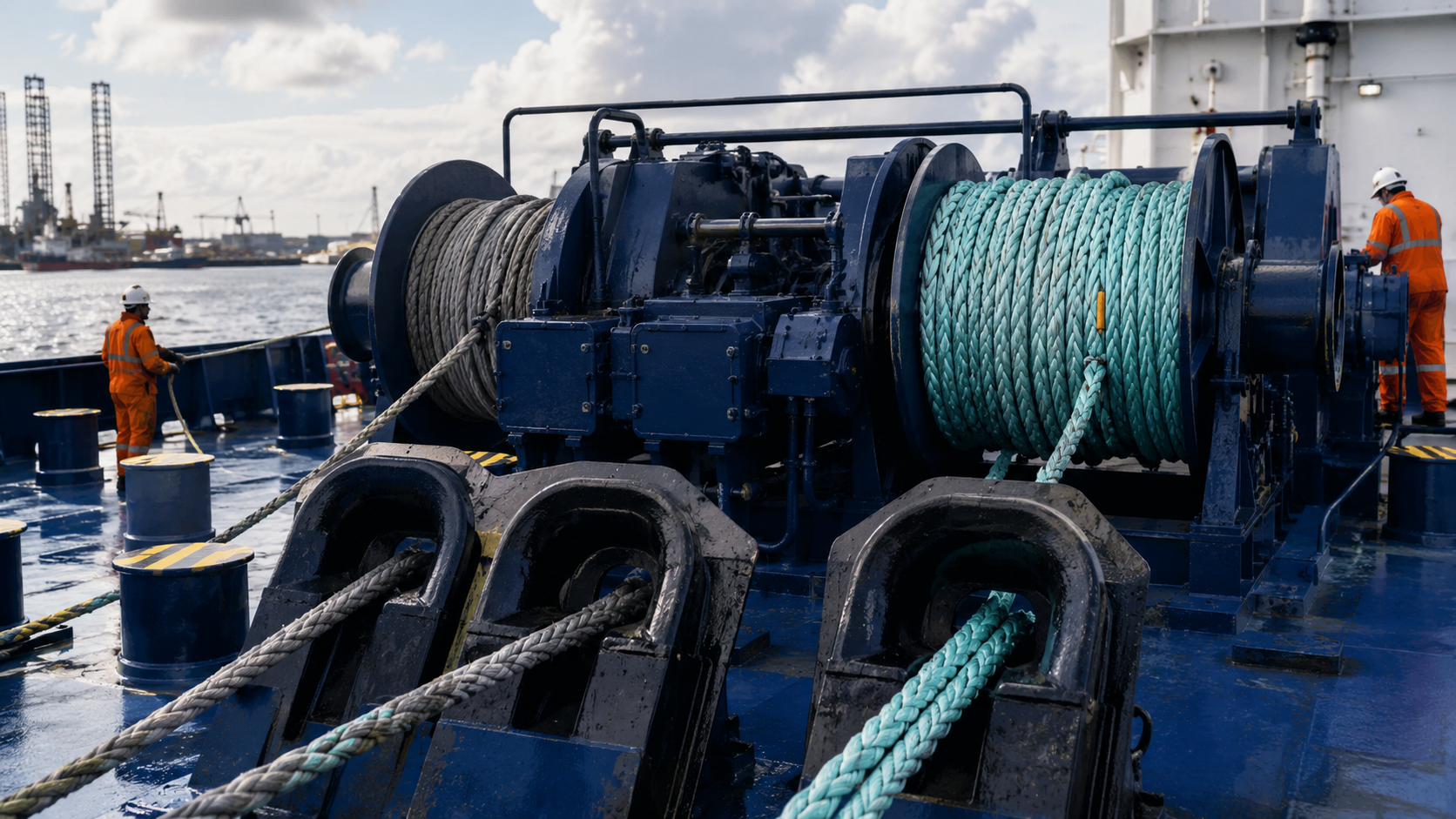
High-Performance Deck Equipment: Selecting Marine Winches and Ropes
Safe and efficient deck management is the core foundation of successful maritime operations. Whether a vessel is executing a complex mooring maneuver in a crowded harbor, securing a tandem towing configuration in heavy open seas, or stabilizing an offshore platform, the physical stresses placed on deck machinery are immense. At the center of these operations sits a carefully engineered combination of mechanical power and material science. For global vessel operators and technical management teams, selecting high-performance deck machinery is not merely a procurement choice; it is a critical operational decision. Ensuring that heavy-duty line handling systems match the specific demands of a vessel's trading profile directly protects cargo integrity, structural assets, and human life.
Technical Specifications of a Reliable Marine Winch
The mechanical weight of mooring and anchoring systems depends completely on the performance of a heavy-duty spooling system known as a marine winch. This equipment must provide reliable torque and precise control under extreme loads, corrosive saltwater exposure, and fluctuating operating temperatures. Selecting the ideal unit requires a deep structural analysis of its drive systems, load-bearing capacities, and integrated braking mechanics.
Drive Architectures: Hydraulic versus Electric Systems
Modern deck design generally relies on two primary power architectures: high-pressure hydraulic drives or variable-frequency electric drives. Hydraulic winches have long been preferred for their exceptional power density, smooth low-speed control, and natural resistance to shock loads caused by sudden vessel movement in rough water. However, modern electric marine winch designs are rapidly gaining popularity due to their superior energy efficiency, reduced maintenance needs, and precise digital monitoring capabilities. Electric setups eliminate the risk of high-pressure hydraulic oil leaks on deck, aligning seamlessly with strict international environmental regulations.
Load Dynamics and Braking Safety Mechanisms
Evaluating a winch requires assessing its nominal pull rating and its static brake-holding capacity. The nominal pull identifies the maximum force the winch can apply while spooling line under active power, whereas the brake-holding capacity defines the force the mechanical brakes can resist when the drum is completely locked. High-performance units utilize automated, multi-disc fallback brakes alongside manual band brakes to guarantee redundancy. This engineering ensures that even during a catastrophic onboard power failure, the tensioned mooring or towing line remains securely locked, preventing uncontrolled line releases.
Durability Requirements and Material Science of Marine Ropes
A winch is only as effective as the line spooled onto its drum. The evolution of marine ropes has shifted from traditional natural fibers to advanced synthetic polymers and high-performance steel wires. Each material composition presents distinct advantages and limitations regarding tensile strength, elasticity, operational weight, and resistance to environmental wear.
Steel Wire Ropes versus High-Performance Synthetics
For traditional heavy heavy-lift applications, deep-sea towing, and permanent anchoring, galvanized steel wire ropes remain an industry standard due to their excellent crush resistance on the winch drum and unmatched surface durability. However, the maritime sector has seen a major transition toward High-Modulus Polyethylene (HMPE) synthetic lines. HMPE marine ropes deliver a tensile strength equal to steel wire of the same diameter but at a fraction of the physical weight. This drastic reduction in weight reduces crew fatigue, speeds up mooring deployments, and completely eliminates the risk of dangerous, high-energy snap-back zones associated with traditional wire failures.
Overcoming Environmental Degradation and Abrasion Wear
Lines running through deck fairleads, chocks, and rollers face constant friction and structural degradation. Synthetic lines must be treated with specialized polyurethane coatings during manufacturing to maximize their resistance to cyclic abrasion. Furthermore, long-term exposure to intense ultraviolet (UV) radiation can weaken polymer structures over time, causing premature core failure. Technical buyers must verify that synthetic lines contain UV-stabilized chemical additives, and maintenance crews must perform regular end-for-end line rotations to balance surface wear across the entire length of the line.
Deck Machinery as a Core Component of Safety Equipment Onboard Ship
It is an operational mistake to view mooring winches, windlasses, and lines solely as cargo-handling or anchoring gear. When analyzing vessel risk management and international regulatory compliance, properly maintained deck machinery functions as an essential pillar of the overall safety equipment onboard ship.
Preventing Mooring Line Snap-Back Accidents
Line snap-back incidents represent some of the most dangerous structural threats to seafaring crews. When a mooring rope is stretched beyond its elastic limit, it stores massive amounts of kinetic energy. If the line parts under tension, it snaps back toward the deck with lethal velocity. High-performance winches address this risk by integrating load-sensing tension monitoring systems. These digital sensors provide real-time tension data to the bridge and deck control stations, alerting operators to adjust line configurations well before a line reaches its breaking point.
Emergency Line Release and Quick-Release Systems
During critical offshore emergencies—such as an engine failure during a storm, a sudden fire on a bunker barge, or unexpected gas pocket releases at a terminal—a vessel may need to disconnect from its mooring or towing layout instantly. Reliable marine winches feature emergency quick-release mechanisms that can be activated remotely from the navigation bridge. These systems override standard brake controls, letting the winch drum free-wheel instantly under load. This capability allows the ship to drift clear of immediate danger, preventing catastrophic hull damage or capsizing scenarios.
Frequently Asked Questions (FAQs)
What is the difference between a marine winch nominal pull and brake-holding capacity? Nominal pull is the maximum pulling force the internal motor can actively generate to reel in a line under power. Brake-holding capacity is a significantly higher rating, representing the maximum static force the locked mechanical brakes can hold to prevent the winch drum from turning once the line is secured.
Why are HMPE marine ropes replacing steel wire ropes in modern mooring operations? HMPE ropes provide a tensile strength equivalent to steel wire but are up to 85% lighter. This weight reduction drastically lowers the risk of crew injuries during handling, minimizes operational deployment times, and reduces dangerous snap-back trajectories if a line parts under tension.
How does regular winch maintenance affect the safety equipment onboard ship profile? Mooring and anchoring systems function as active safety equipment during emergency berthing or heavy weather holding. Regular maintenance—including lubricating gear trains, calibrating hydraulic relief valves, and testing quick-release systems—ensures the vessel can instantly execute emergency separations or handle sudden hull stresses safely.
What is cyclic compression in marine ropes and how is it managed? Cyclic compression occurs when synthetic lines are tightly wound onto a winch drum under high tension, causing internal fibers to crush and overheat due to friction. It is managed by using ropes with specialized heat-resistant cores, installing drum dividers, and ensuring correct spooling tension during deployment.
How often should onboard deck winches and ropes undergo official inspection? Winch systems and lines must be visually inspected by the crew before every mooring or anchoring operation. Formally, they undergo detailed structural reviews, brake testing, and non-destructive testing (NDT) during annual class surveys and mandatory five-year drydock periods to maintain vessel compliance certificates.