

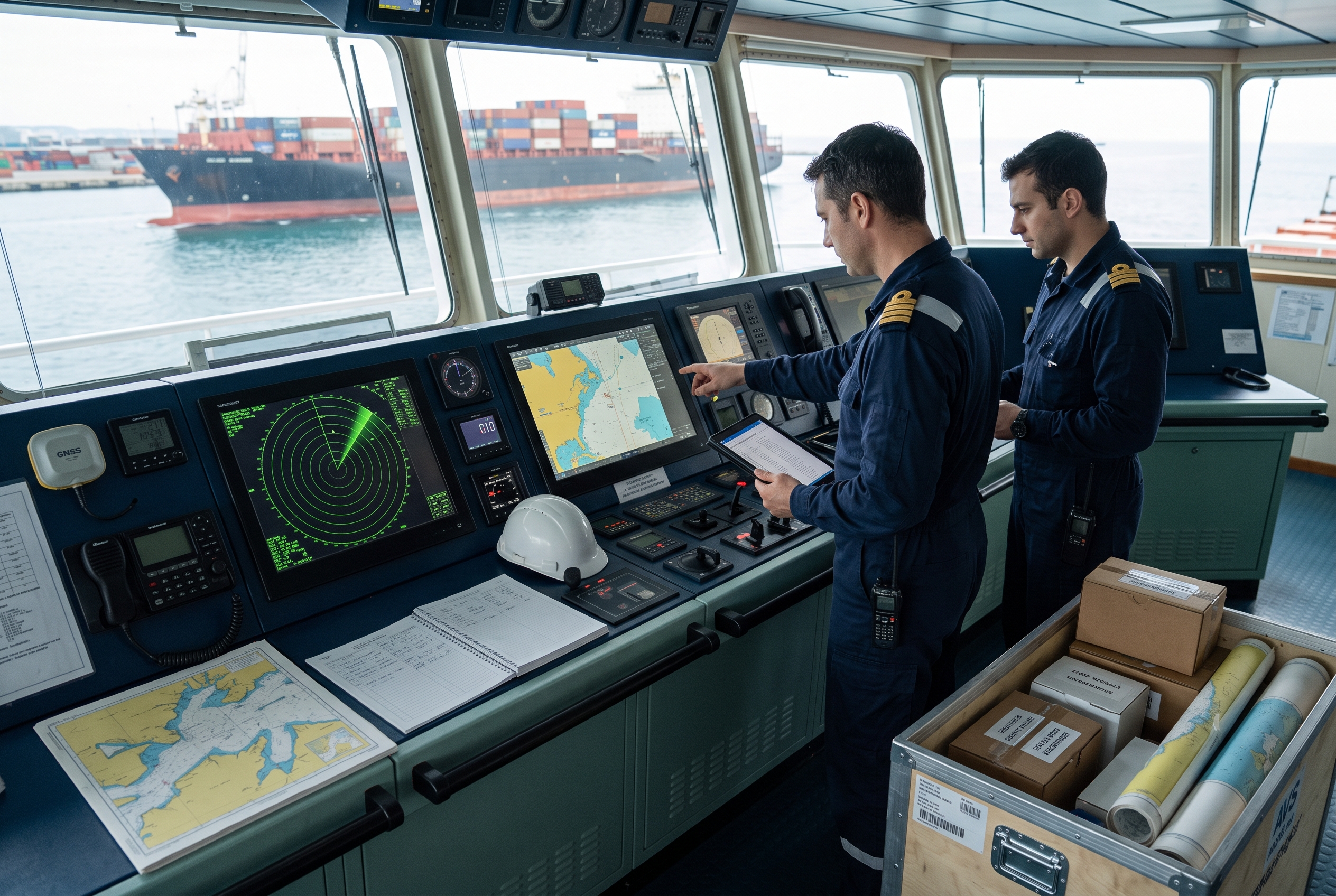
Marine navigation equipment includes the instruments, electronic systems and tools used to establish a vessel’s position, heading and movement and to support voyage planning and monitoring. Purchasing decisions should match the vessel’s installed systems, intended operation and applicable carriage requirements.
Introduction
Bridge purchasing starts with a clear requirement. Identify whether the request concerns a complete unit, a replacement component, a chart or publication, or routine bridge consumables. A correct product description helps the navigation team, technical superintendent and purchasing department review the same specification.
What Is Marine Navigation Equipment?
The category includes radar, ECDIS, satellite positioning receivers, compasses and other navigational aids. Related bridge requirements include communications equipment, nautical charts and publications. IMO’s safety of navigation framework and SOLAS provide the regulatory context; carrying equipment alone does not establish that its installation, maintenance and use meet every applicable requirement.
Ship Navigation Equipment Categories
1. Electronic Navigation Systems
- ECDIS: an Electronic Chart Display and Information System used for chart-based voyage planning and monitoring. SOLAS carriage requirements apply to specified ship categories; they are not identical for every vessel.
- GNSS receivers: provide satellite-based position information. Check the installed receiver, antenna and interface requirements when requesting replacements.
- AIS: the Automatic Identification System exchanges vessel information. Its information supports bridge awareness; it does not replace other navigational assessments or watchkeeping.
- Integrated bridge systems: bring relevant functions together. Replacement components must be assessed for compatibility with the actual installation.
2. Radar & Detection Systems
Marine radar supports the detection and assessment of surrounding targets. Depending on the installed system, associated tracking functions may include ARPA. For an X-band or S-band radar requirement, identify the maker, model and relevant component rather than using “marine radar” as the complete requisition description.
3. Communication Equipment
Bridge communications requirements may include VHF equipment and items used within the Global Maritime Distress and Safety System (GMDSS), such as distress alerting, locating and maritime safety information equipment. Specify the vessel’s actual arrangement and operating area; not every radio or terminal serves the same purpose.
4. Traditional Navigation Tools
Magnetic and gyrocompasses, plotting instruments and other bridge tools have different functions. Signal flags, day shapes and navigation lights are related operational requirements. For replacements, specify dimensions, mounting arrangements and relevant technical requirements. Do not assume that a sextant or handheld device satisfies a required electronic system’s backup arrangements.
Charts and Nautical Publications
Charts and publications must cover the intended voyage and remain up to date. Request the correct identifiers, editions and formats. For electronic navigational charts (ENCs), confirm the relevant coverage, permits and update arrangements. The IHO’s guidance on electronic charts and carriage requirements explains the distinction between ECDIS and other electronic chart systems, including backup considerations.
Keep chart data updates separate from ECDIS software or hardware work in the requisition. As an example of an official chart service’s guidance, UKHO’s AVCS updates and support describes its update information and delivery channels. Confirm the actual product, license and delivery arrangements before purchase.
| Requirement | Details for quotation |
|---|---|
| Electronic equipment or spare | Manufacturer, model, part number, power supply and interfaces |
| Paper chart or publication | Identifier, edition, coverage and quantity |
| Electronic chart or publication | Coverage, format, licensing details and update requirements |
| Bridge consumable | Description, dimensions, material and quantity |
Compliance & Certifications
Identify the applicable IMO performance standards, required approval documentation and flag acceptance for the proposed equipment. Match documents to the manufacturer and model. Avoid treating a general “IMO/SOLAS approved” description as a substitute for checking the particular product and installation.
ECDIS procurement in 2026: the IMO’s 2026 amendments summary explains the phased introduction of revised ECDIS performance standards using new IHO specifications. The revised standards apply voluntarily to new installations from January 1, 2026 and to all new installations from January 1, 2029. This does not mean every existing ECDIS must be replaced in 2026. Have the responsible technical team establish the applicable standard before selecting new equipment.
Why Choose AVS for Navigation Equipment?
- Supply coverage: 1,500+ ports in 126 countries.
- Experience: ship supply operations since 1985.
- Technical requirements: requests can be directed through AVS technical services for assessment.
- Purchasing channels: AVS has a ShipServ supplier profile and an RFQ portal.
Delivery Capabilities
Include the delivery port, ETA, required onboard date and the vessel’s berth, yard or anchorage status. Confirm availability, transport method, access requirements and charges for the specific request. Physical delivery, installation, commissioning, chart permits and software activation may involve separate tasks; identify each required task before accepting a quotation.
AVS Global Advantage
Use one clearly structured requisition to coordinate the bridge requirement with other vessel stores. Separate equipment, consumables, chart products and any service work into identifiable line items. State whether alternatives are permitted and who will approve them. AVS can assess the request; the responsible vessel or technical team retains the equipment acceptance and operational checks.
Conclusion
Effective navigation equipment purchasing depends on accurate identification, compatibility checks and the right documents. Before ordering, resolve differences between the requested item and the proposed supply, and distinguish delivery from any subsequent installation or activation work.
Frequently Asked Questions About Marine Navigation Equipment
What is marine navigation equipment?
Marine navigation equipment includes the instruments, systems and tools used to determine a vessel’s position, heading and movement and to support voyage planning and monitoring. A purchasing list may include electronic equipment, replacement parts, charts, publications and bridge consumables. The vessel’s technical and navigation teams should define the actual requirement before quotations are compared.
Does ECDIS automatically replace paper charts?
ECDIS can meet SOLAS chart carriage requirements when the applicable conditions are satisfied, including appropriate type approval, official up-to-date electronic navigational charts and adequate backup arrangements. A generic chartplotter or electronic chart display is not automatically equivalent. Confirm the accepted arrangement for the particular vessel with the responsible technical team and flag requirements.
What information is needed to request charts and nautical publications?
Specify the intended voyage or operating area, chart or publication identifiers, required editions, quantities and paper or digital format. For electronic products, include relevant system and licensing details through the appropriate supply channel. Confirm coverage, update arrangements and delivery or activation needs with the navigation team before ordering; a title alone may not identify the correct product.
What should a navigation equipment RFQ to AVS include?
Send AVS Global Ship Supply the manufacturer, model, part number where available, quantities, vessel details, delivery port and ETA. Include relevant photographs or nameplate details, power and interface requirements, and requested approval documents. State whether installation, commissioning or software activation is required, so these tasks can be assessed separately from physical equipment delivery.
Next Step: Send Your Bridge Supply Requisition
Share the equipment or publication list, technical identifiers, quantities, vessel details, delivery port and ETA. Include the documents and any service work required so AVS can assess the scope of your request.