

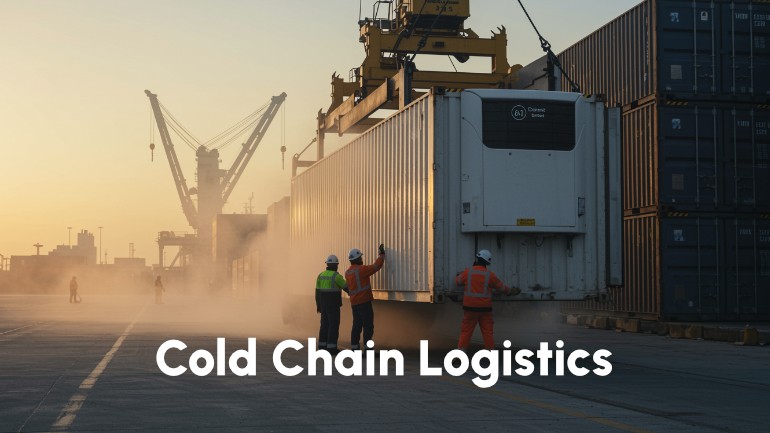
Cold chain logistics refers to the end-to-end management of products that must be kept within a specific temperature range from origin to final delivery. It applies to:
- Fresh and frozen food
- Medical supplies and vaccines
- Chemical and biological reagents
- Temperature-sensitive lubricants or coatings
In maritime settings, the cold chain extends beyond the port gate. It includes vessel-side transfers, onboard storage, and even temperature log documentation for ISM and HACCP compliance.
Why Cold Chain Matters in Ship Supply
- Spoilage prevention during cross-border transit and extended anchorage
- Crew safety and nutrition, especially on deep-sea or offshore voyages
- Regulatory compliance with port health inspections, veterinary rules, and international food safety standards
- Brand protection for suppliers and operators through traceability and quality assurance
Components of an Effective Cold Chain
H3: Key Infrastructure and Equipment
- Refrigerated trucks and reefer containers with GPS and temp monitoring
- Blast freezers and cold rooms at port and warehouse facilities
- Data loggers, thermographs, and RFID tags to track conditions in real time
- Portable insulated packaging for last-mile delivery in port zones
H3: Process and Documentation Flow
- Pre-shipment inspection for packaging, labeling, and temp integrity
- Transport with continuous temp monitoring via telematics
- Delivery to vessel with timestamped handover, photos, and crew confirmation
- Final onboard storage check by catering or medical officer
- Digital archive of the cold chain (can be linked to the vessel’s Safety Management System)
Benefits and Strategic Value
Advantages of Cold Chain Logistics
- ✅ Reduces cargo rejections or PSC detentions
- ✅ Supports compliance with HACCP, MLC, and ISPS Code protocols
- ✅ Builds trust with vessel masters and fleet managers
- ✅ Enables longer route planning without compromising product safety
Common Challenges in Maritime Cold Chain
- 🔸 Temperature deviation due to long clearance or port delays
- 🔸 Inconsistent cold storage at transshipment points
- 🔸 Lack of trained handlers for perishable cargo
- 🔸 Documentation errors or incomplete data logging
Comparative Table: Cold Chain vs Standard Logistics
| Feature | Cold Chain Logistics | Standard Logistics |
|---|---|---|
| Temperature Control | Actively maintained throughout transit | Not required |
| Applicable Goods | Perishables, pharma, lab samples | Dry goods, tools, non-sensitive |
| Handling Equipment | Insulated, monitored | General-purpose |
| Compliance Requirements | HACCP, ISO 22000, ISM | Basic traceability |
| Delivery Protocols | Time-stamped, verified handovers | Basic POD |
Best Practices for Cold Chain in Ship Supply
- Vet suppliers for certified cold storage and transport assets
- Request data logger evidence with each delivery batch
- Train port and ship-side personnel on hygiene and handling SOPs
- Use sealed, tamper-evident packaging
- Monitor delivery windows based on ship arrival forecasts
Frequently Asked Questions About Cold Chain Logistics
What is cold chain logistics?
Cold chain logistics refers to the transport, storage, and handling of temperature-sensitive products under controlled conditions, ensuring they remain within safe temperature ranges throughout the supply journey.
Which products require cold chain management in maritime supply?
Common examples include:
- Frozen meats and seafood
- Dairy products
- Vaccines and medical supplies
- Temperature-sensitive chemicals and reagents
What are the typical temperature ranges in cold chain logistics?
- Frozen goods: -18°C or lower
- Chilled items: +2°C to +8°C
- Ambient controlled goods: +15°C to +25°C
Ranges may vary based on product specifications and country regulations.
Why is cold chain logistics critical for ship supply?
Vessels on extended routes or offshore operations rely on provisions and medical supplies that remain safe and effective over time. Cold chain logistics:
- Prevents spoilage and foodborne illness
- Supports regulatory compliance (e.g., HACCP, MLC)
- Preserves the efficacy of pharmaceuticals
What technologies are used in cold chain logistics?
- GPS-enabled refrigerated trucks and reefers
- RFID and IoT sensors for real-time temperature tracking
- Thermal blankets and insulated containers
- Digital data loggers for documentation and audits
What causes cold chain failures?
- Improper pre-loading temperature stabilization
- Delays in customs or port clearance
- Faulty refrigeration units
- Mishandling during transfer or last-mile delivery
How can ship operators verify cold chain integrity?
- Request temperature loggers with each shipment
- Perform temperature checks during onboard receipt
- Include cold chain verification in ISM or HACCP checklists
- Work with certified suppliers experienced in marine logistics
Is cold chain logistics more expensive?
Yes, but the cost offsets the risk of:
- Product loss due to spoilage
- Health risks to crew
- Regulatory penalties or detentions
It’s a value-preserving investment, not an avoidable cost.
What certifications should cold chain suppliers hold?
- HACCP (Hazard Analysis and Critical Control Points)
- ISO 22000 (Food Safety Management)
- GDP (Good Distribution Practices) for pharmaceuticals
- Local health or port authority approvals