

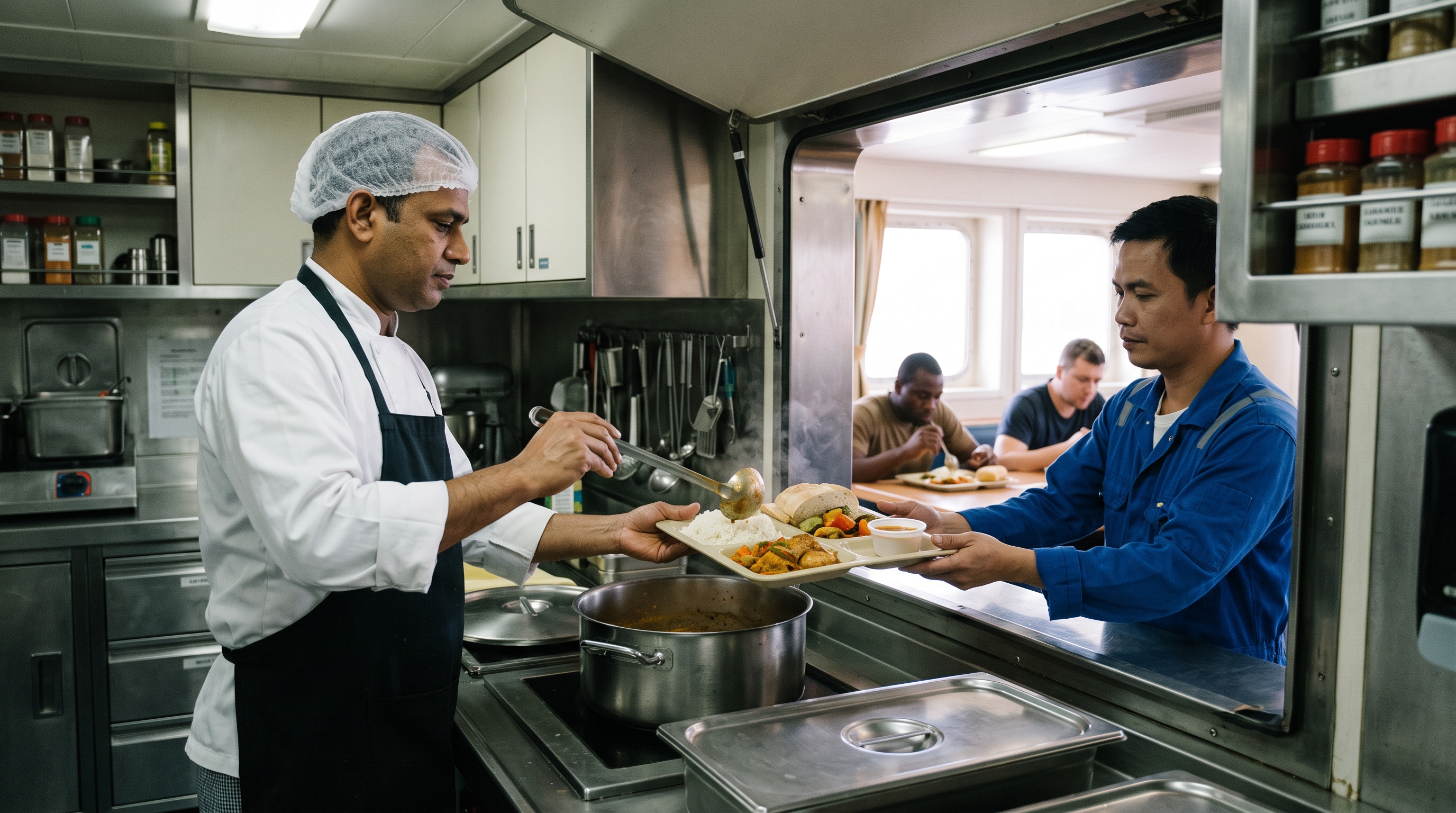
Modern merchant vessels are among the most multicultural workplaces in the world.
A single crew may include seafarers from several countries, each bringing different languages, traditions, dietary preferences and expectations around food. This diversity is one of the strengths of the maritime industry, but it also creates a very practical challenge for those responsible for life onboard.
How do you create a catering experience that works for everyone?
For crews spending weeks or months away from home, food can play an important role in creating familiarity, comfort and connection. A meal may be one of the few parts of the day that feels recognisable, especially during long voyages, demanding schedules or extended periods away from family.
This is why catering for multicultural crews is about more than variety. It is about understanding the people onboard.
Food as a connection to home
Food carries a strong sense of identity.
A familiar dish can evoke memories of family, celebrations and everyday routines. At sea, where crew members may be thousands of miles from home, those associations can become even more meaningful.
Providing familiar flavours and culturally appropriate meals can help create moments of comfort and normality. It can also demonstrate that the different backgrounds of crew members are understood and respected.
This does not mean reproducing every dish exactly as it would be prepared at home. Vessel kitchens have limitations around storage, ingredient availability, budgets and equipment. The challenge is finding practical ways to incorporate familiar ingredients, flavours and cooking styles into the wider menu.
Sometimes a small detail can make a significant difference.
One menu does not fit every crew
Catering plans that work well on one vessel may be less suitable on another.
Crew composition can change between contracts, meaning food preferences and dietary requirements may also change. A vessel with a predominantly Filipino crew, for example, may have different expectations from one with crew members from India, Eastern Europe, Turkey or several regions at once.
Religious requirements may also affect menu planning, as can allergies, intolerances and individual dietary choices.
Understanding the makeup of the crew before provisioning helps catering teams plan more effectively and reduces the risk of supplying products that will not be used.
It can also help improve satisfaction without necessarily increasing cost. Better information allows purchasing decisions to reflect what people are actually likely to eat.
Familiarity and variety need to work together
While familiar meals matter, crews also need variety.
Long voyages can make repetitive menus frustrating, particularly when the same ingredients and dishes appear week after week. Effective catering therefore requires a balance between dependable favourites and enough variety to keep meals appealing.
Local sourcing can support this.
As vessels move between regions, locally available produce, spices and ingredients can bring additional variety to onboard menus. They also create opportunities for cooks to introduce new dishes while still retaining the familiar staples crews value.
This combination of local ingredients and familiar recipes can make catering more flexible and more engaging.
It also reinforces one of the ideas behind AVS Global Ship Supply's Home At Sea campaign: a sense of home does not have to mean recreating one particular place. It can come from recognising the different cultures represented onboard and creating an environment in which everyone feels considered.
The role of the onboard cook
The onboard cook sits at the centre of this challenge.
They are expected to manage ingredients, budgets, nutritional requirements and food safety while preparing meals for people with very different preferences.
That requires both technical skill and cultural awareness.
Training can help catering personnel understand different cuisines, adapt recipes and use ingredients effectively. It can also support better menu planning, portion management and stock control.
The goal is not to turn every ship cook into an expert in every cuisine. It is to provide the knowledge and flexibility needed to create menus that are varied, practical and appropriate for the people onboard.
Good communication is equally important.
Simple feedback from crew members can help identify popular meals, products that are being wasted and opportunities to improve future menus. Over time, this creates a catering system that responds more closely to the crew rather than relying on a standard approach.
Better catering can support better relationships
Shared meals are one of the few regular opportunities for crews to come together outside their operational duties.
Onboard, the mess room is not simply somewhere to eat. It is a social space.
Meals can encourage conversation between departments and nationalities, helping build stronger relationships across the vessel. Special meals linked to cultural or national occasions can also create opportunities for crews to learn more about one another.
These moments may appear small, but they can contribute to a more inclusive onboard environment.
For crews living and working together for long periods, that matters.
Creating a home for everyone onboard
There is no single definition of what makes a vessel feel like home.
For one seafarer it may be a familiar breakfast. For another it may be a favourite spice, a traditional dish or simply having enough choice to enjoy mealtimes.
Supporting multicultural crews means recognising those differences rather than trying to eliminate them.
Through Home At Sea, AVS Global Ship Supply aims to place greater emphasis on the human side of ship supply and catering. That means considering not only what a vessel needs operationally, but also who is living onboard and how everyday decisions can improve their experience.
Because when crews come from many different places, creating a sense of home is not about choosing one culture over another.
It is about making room for all of them.