

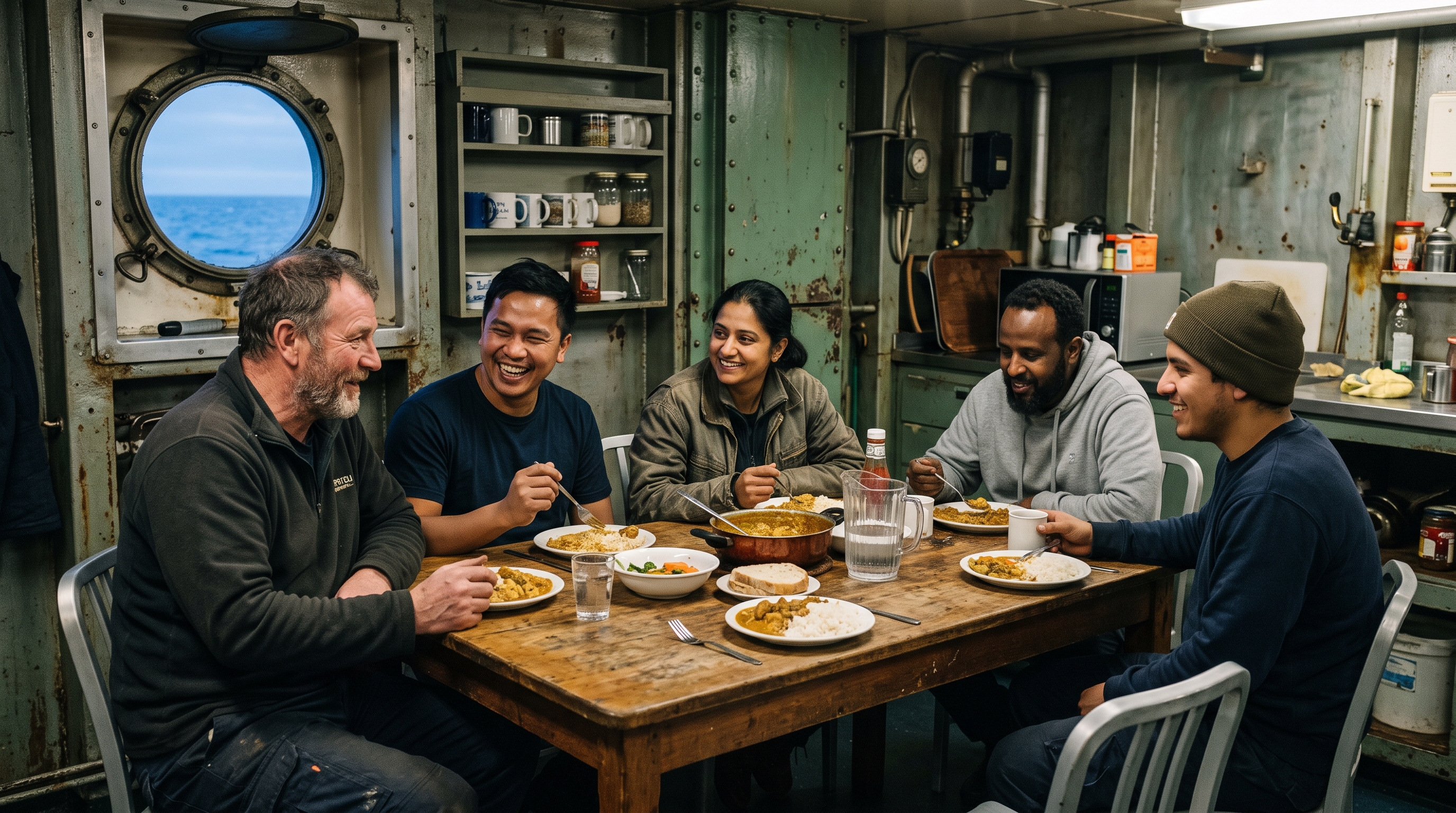
For most people, home is associated with familiarity. It is found in everyday routines, favourite meals, conversations with family, and the comfort of knowing what to expect from daily life.
For seafarers, maintaining that sense of familiarity can be far more challenging.
Working at sea often means spending weeks or months away from home, family and friends while operating in demanding environments and changing locations. While shipping keeps global trade moving, life onboard can present unique challenges that are often invisible to those onshore.
As conversations around crew welfare continue to evolve, there is growing recognition that creating a positive onboard environment is not simply a welfare consideration. It is closely linked to morale, retention and overall wellbeing.
Home means different things to different people
Modern vessels are home to diverse crews representing different nationalities, cultures and backgrounds. As a result, there is no single definition of what makes someone feel at home onboard.
For some, it may be the ability to stay connected with family. For others, it may be familiar food, cultural traditions or simply maintaining routines that provide comfort and stability during long periods at sea.
These small details can have a significant impact. Familiar experiences help create a sense of normality in an environment that is often characterised by changing schedules, operational pressures and long periods away from loved ones.
Why food remains one of the strongest connections to home
Among the many factors that contribute to crew wellbeing, food plays a unique role.
Meals are often one of the few moments in the day when crews can come together, take a break from operational responsibilities and enjoy a sense of community. Beyond nutrition, food can provide a powerful connection to culture, identity and home.
A familiar dish can trigger memories, create comfort and help reduce feelings of isolation. For multicultural crews, access to varied and culturally relevant meal options can also help foster inclusion and improve morale onboard.
This is why catering management has become an increasingly important part of the crew welfare conversation.
The importance of consistency
When discussing wellbeing at sea, attention is often focused on major initiatives and programmes. However, many of the factors that shape everyday experiences onboard are surprisingly simple.
Reliable access to quality food, well-managed provisions and consistent onboard services help create routines that crews can depend on. These routines become particularly important during periods of uncertainty, operational disruption or extended voyages.
Consistency helps reduce stress. It provides a sense of stability and contributes to a more positive onboard environment.
Creating a better experience at sea
As the maritime industry continues to focus on attracting and retaining skilled seafarers, understanding the human side of life at sea will become increasingly important.
Supporting crews is not only about responding to challenges when they arise. It is also about creating conditions that help people feel comfortable, valued and connected throughout their time onboard.
For many seafarers, feeling at home is not defined by a single service or initiative. It is created through a combination of small, everyday experiences that contribute to wellbeing over time.
Whether through familiar meals, strong onboard communities or reliable support systems, those experiences help transform a vessel from a workplace into a place where people can live and work more comfortably while away from home.