

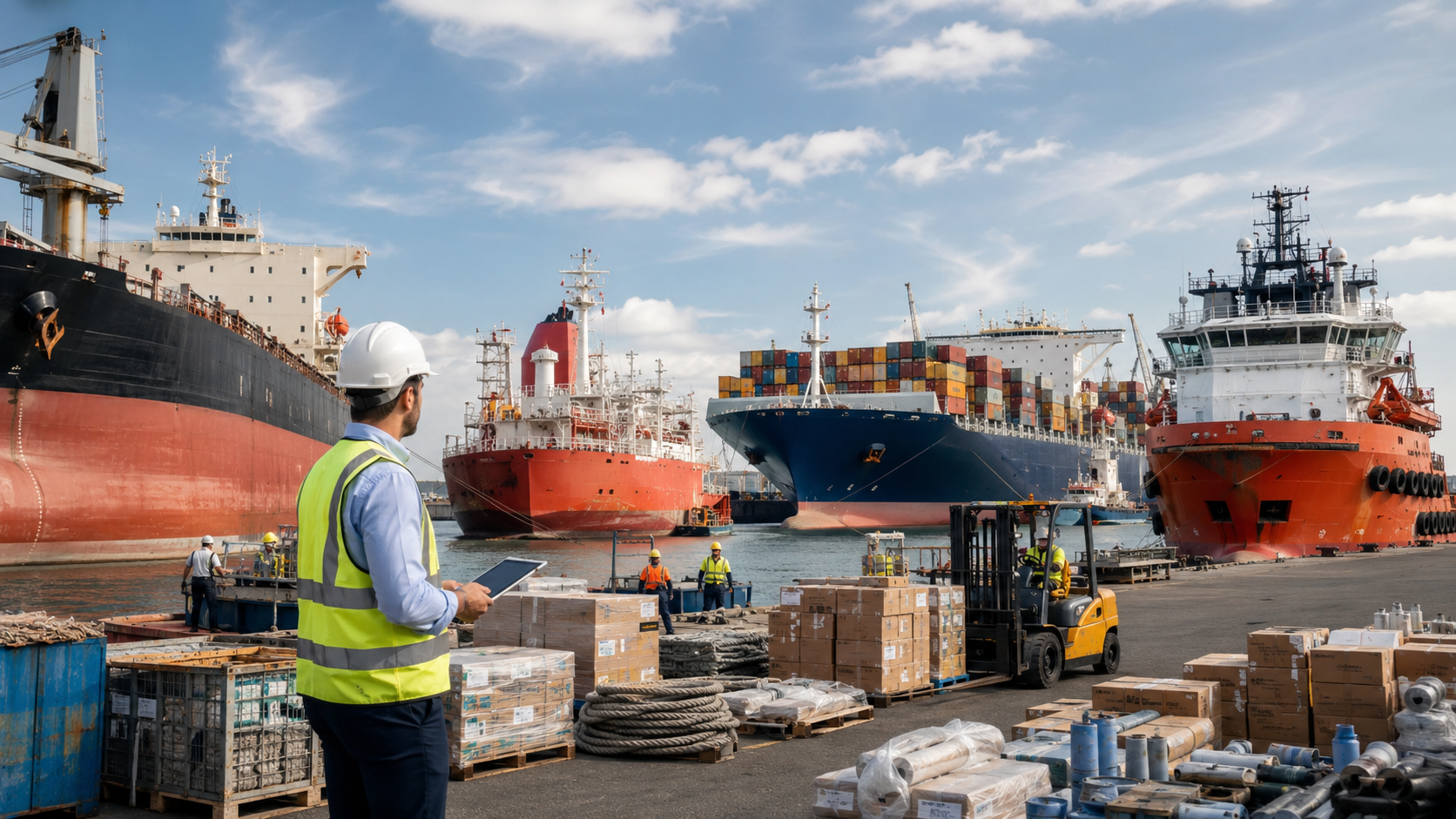
Vessel Types Explained: How Procurement Strategies Differ Between Bulk Carriers, Tankers, Container Ships and OSVs
Marine procurement is never a one-size-fits-all process. A bulk carrier, a tanker, a container vessel and an offshore support vessel may all requireprovisions, technical stores, safety equipment and deck supplies, but the priority, urgency, documentation and product specifications can be completely different.
For marine procurement officers, fleet managers and technical superintendents, understanding how procurement changes by vessel type helps reduce delays, prevent wrong deliveries and improve cost control across the fleet. A strong vessel types procurement strategy allows ship operators to standardize where possible while still respecting the operational needs of each vessel profile.
At AVS Global Ship Supply & Catering, we support different vessel types with provisions, bonded stores, technical stores, deck equipment, safety items and offshore supply solutions across global ports. For wider supply coverage, see Global Ship Supply.
How AVS Global Ship Supply supports supply by vessel type
Each vessel type changes what buyers order and document, from hold-cleaning chemicals on bulk carriers to offshore-grade equipment on support vessels. AVS Global Ship Supply supplies provisions and technical, deck, engine, cabin and bonded stores to different vessel types through global ship supply across 1,500+ ports in 126 countries. Send vessel type, IMO number, delivery port, ETA and item lists with IMPA codes. Our global and local supplier guide covers fleet-level sourcing choices.
Why Vessel Type Defines Ship Supply Strategy
Every vessel type has a different operating environment, crew profile, cargo operation and port stay pattern. These differences directly affect how purchasing teams prepare RFQs, select suppliers and manage delivery schedules.
A bulk carrier may need hold cleaning chemicals before loading a new cargo. A tanker may require product-specific tank cleaning chemicals, safety documentation and equipment related to inert gas systems. A container vessel may have only a short port window, making fast delivery of lashing gear, reefer spares and technical stores critical. An OSV or PSV may require offshore-grade equipment, project-based logistics and urgent spare parts for demanding offshore operations.
This is why procurement strategy should begin with the vessel profile. The same IMPA or ISSA code structure may help standardize product identification, but vessel type still determines the specification, urgency, quantity and documentation requirements.
For technical categories such as deck stores, engine stores, safety items and operational equipment, see Technical Stores.
Bulk Carriers: Provisions, Hold Cleaning Chemicals and Deck Stores
Bulk carriers are designed to transport dry cargo such as grain, coal, cement, minerals, steel products and fertilizers. Their procurement needs are strongly linked to cargo change, hold condition, long voyages and deck operations.
Key Procurement Priorities for Bulk Carriers
Bulk carrier supply usually focuses on provisions, deck stores, cleaning chemicals, mooring items and cargo hold preparation products. Because bulkers often operate on long routes with limited port time, procurement teams must plan both crew welfare and cargo readiness in advance.
The most important categories include:
-
Provisions and bonded stores
-
Hold cleaning chemicals
-
Deck stores and maintenance materials
-
Mooring ropes, wires and shackles
-
Safety and PPE items
-
Paints, brushes and rust removal tools
-
Cleaning equipment and general consumables
For food and crew-related supply categories, see Provisions Supply.
Hold Cleaning and Cargo Compatibility
Hold cleaning is one of the most critical procurement areas for bulk carriers. The required chemical depends on the previous cargo, next cargo and cleanliness standard expected by charterers or surveyors.
For example, cleaning after coal cargo is different from cleaning before grain loading. A wrong or weak chemical may cause cargo contamination risk, failed inspection or loading delays. This is why procurement teams should provide clear information about the previous cargo, next cargo, hold condition and required delivery port when requesting hold cleaning chemicals.
RFQ Detail for Bulk Carrier Supply
A good RFQ for a bulk carrier should include vessel name, IMO number, port, ETA, delivery window, crew size, previous cargo, next cargo and required cleaning standard. For deck stores, exact size, material, specification and quantity should be included to avoid substitutions that do not fit the vessel’s operation.
Tankers: Tank Cleaning, Inert Gas Systems and Chemical Procurement
Tankers have more complex procurement requirements because they carry liquid cargo such as oil products, chemicals or gas. Their supply strategy must consider safety, cargo compatibility, documentation and regulatory expectations.
Tanker Procurement Priorities
Tanker procurement is usually more documentation-sensitive than standard merchant vessel supply. Product specification, safety data sheets and compatibility information are often as important as the product itself.
Key tanker supply categories include:
-
Tank cleaning chemicals
-
Inert gas system-related consumables
-
Gas detection equipment and calibration items
-
Safety and PPE products
-
Spill response materials
-
Anti-static equipment
-
Deck and engine stores
-
Technical maintenance items
Chemical Procurement and Documentation
Tank cleaning chemicals for tankers require accurate specification. Procurement officers should not request chemicals only by generic name. They should include tank type, previous cargo, next cargo, required cleaning result, coating type and any specific approval or documentation requirement.
For tankers, documentation may include MSDS/SDS, product technical data sheets, certificates of conformity, handling instructions and compatibility information. This helps the technical team, vessel crew and supplier align before delivery.
Inert Gas and Safety-Sensitive Supply
Tankers operate with strict safety procedures. Items related to inert gas systems, gas detection, PPE and spill response must be supplied correctly and quickly. A wrong product may create operational risk, inspection issues or delays during cargo operations.
For tanker procurement, the lowest price should not be the only decision factor. Correct specification, compliance, delivery reliability and documentation quality are equally important.
Container Vessels: Lashing Gear, Reefer Spares and Fast Port Turnarounds
Container vessels operate with strict schedules and short port stays. Procurement strategy for container ships is highly time-sensitive because delays can affect vessel rotation, terminal planning and cargo operations.
Container Vessel Stores and Operational Needs
Container vessel stores usually focus on lashing equipment, reefer-related spares, deck consumables, safety items and technical stores. Because container ships may call several ports in a short period, procurement teams must choose the best delivery location based on availability, port restrictions and ETA accuracy.
Important categories include:
-
Lashing bars, twistlocks and turnbuckles
-
Reefer container monitoring spares
-
Electrical and communication items
-
Deck stores and maintenance products
-
Safety equipment and PPE
-
Engine and technical consumables
-
Stationery and crew welfare items
Lashing Gear Urgency
Lashing equipment is one of the most urgent categories for container vessels. If lashing gear is missing, damaged or not delivered on time, it can affect cargo securing operations and vessel departure.
Because port turnaround is short, RFQs for lashing gear should include exact item name, type, dimensions, required quantity, delivery terminal, cut-off time and any preferred brand or standard. Substitutions should be approved before delivery.
Reefer Spares and Monitoring Equipment
Reefer containers require reliable monitoring and maintenance. Container vessels may need reefer plugs, cables, sensors, monitoring components and electrical consumables. These items differ from standard spare parts because they are directly linked to temperature-sensitive cargo.
For reefer-related RFQs, procurement teams should include model details, voltage, plug type, technical drawings if available and urgency level.
OSVs and PSVs: Offshore-Grade Equipment and Project Logistics
Offshore Support Vessels and Platform Supply Vessels operate in a more demanding environment than standard merchant vessels. Their procurement strategy is usually project-based, urgent and technically specific.
For more information about offshore vessel operations, see OSVs.
OSV Supply Requirements
OSV supply often includes deck equipment, offshore-rated PPE, lifting gear, technical stores, provisions, safety items and project cargo support. These vessels may support drilling platforms, offshore construction, subsea operations or energy projects.
Main OSV supply categories include:
-
Offshore-grade PPE
-
Lifting and rigging equipment
-
Deck stores and heavy-duty consumables
-
Technical stores
-
Safety and emergency equipment
-
Provisions and bonded stores
-
Project logistics materials
-
Urgent spare parts
Offshore-Grade Equipment
OSVs often need equipment that can handle harsh marine conditions, heavy use and offshore safety expectations. Standard commercial items may not always be suitable. Procurement teams should check whether the item must meet a specific offshore standard, lifting certificate, load rating or safety requirement.
Project Logistics and Urgent Deliveries
OSV procurement is closely connected to project timing. A small delay in a spare part, lifting item or safety product can affect offshore operations. Therefore, OSV RFQs should clearly state the operation type, delivery base, mobilization date, cargo handling requirements and documentation needs.
Cross-Vessel Procurement: When Fleet Managers Standardize Categories
Although every vessel type has unique requirements, fleet managers can still standardize some procurement categories across the fleet. This helps reduce cost, simplify purchasing and improve reporting.
Categories That Can Be Standardized
Common categories across bulk carriers, tankers, container vessels and OSVs include:
-
Provisions
-
Bonded stores
-
Basic PPE
-
Cleaning materials
-
Stationery
-
General deck consumables
-
Standard engine consumables
-
Safety signage
-
Basic cabin and galley items
Standardization works best when product specifications are not vessel-critical. For example, general cleaning products or stationery can often be standardized. However, chemicals, lashing gear, lifting items and safety-sensitive products should be managed with vessel-specific details.
Why Standardization Still Needs Flexibility
A fleet procurement strategy should balance standardization and vessel-specific requirements. Using the same supplier across multiple ports can improve communication, invoicing, product consistency and delivery coordination. However, the purchasing team must still adapt RFQs according to vessel type, cargo operation and port restrictions.
This is where a global ship supplier can support fleet managers by combining standard categories with port-specific execution.
For direct purchasing requests, use Quick Quote CTA.
How RFQ Detail Changes by Vessel Profile
A strong RFQ reduces delays, wrong deliveries and repeated clarification emails. However, the required RFQ details change depending on vessel type.
Bulk Carrier RFQ Details
For bulk carriers, the RFQ should include:
-
Vessel name and IMO number
-
Port and delivery location
-
ETA and delivery window
-
Crew size for provisions
-
Previous cargo and next cargo for hold cleaning
-
Required chemical type or cleaning result
-
Deck store specifications
-
Quantity, unit and preferred brand if any
Tanker RFQ Details
For tankers, the RFQ should include:
-
Vessel name and IMO number
-
Tank type and coating information
-
Previous cargo and next cargo
-
Required cleaning standard
-
Product documentation requirements
-
SDS/MSDS request
-
Safety or compliance requirements
-
Port restrictions and delivery timing
Container Vessel RFQ Details
For container vessels, the RFQ should include:
-
Vessel name and IMO number
-
Terminal and berth information
-
ETA, ETB and ETD
-
Cut-off delivery time
-
Lashing gear type and dimensions
-
Reefer spare model or technical details
-
Quantity and urgency level
-
Contact person at port or vessel
OSV and PSV RFQ Details
For OSVs and PSVs, the RFQ should include:
-
Vessel name and IMO number
-
Offshore project or operation type
-
Delivery base or port
-
Mobilization date
-
Technical specification
-
Certification requirement
-
Lifting or load rating if applicable
-
Urgency and logistics instructions
The more detailed the RFQ, the more accurate the quotation, availability check and delivery planning will be.
Conclusion: Vessel Type Should Guide Every Procurement Decision
Bulk carriers, tankers, container vessels and OSVs all require ship supply services, but their procurement strategies are not the same. Bulkers need strong planning for hold cleaning, deck stores and provisions. Tankers require chemical accuracy, safety documentation and compliance-focused procurement. Container vessels depend on fast port turnarounds, lashing gear and reefer-related spares. OSVs and PSVs require offshore-grade equipment, urgent spare parts and project logistics support.
For marine procurement officers, fleet managers and technical superintendents, the best approach is to combine fleet-wide standardization with vessel-specific RFQ detail. This improves cost control, reduces operational risk and helps ensure that the right products reach the right vessel at the right port.
AVS Global Ship Supply & Catering supports different vessel types with global ship supply, technical stores, provisions, bonded stores and offshore supply solutions across international ports.
For vessel-specific supply requests, use Quick Quote.
FAQ
Why do bulk carriers need different chemicals than tankers?
Bulk carriers usually need hold cleaning chemicals based on dry cargo residue, while tankers need tank cleaning chemicals based on liquid cargo compatibility, coating type and safety requirements. The cleaning objective and documentation needs are different for each vessel type.
What technical stores categories matter most on container vessels?
The most important technical stores for container vessels include lashing gear, reefer-related spares, deck consumables, electrical items, safety equipment and urgent maintenance materials. Fast delivery is critical because container vessels usually have short port stays.
How does OSV procurement differ from merchant fleet supply?
OSV procurement is more project-based and offshore-focused. OSVs may need certified lifting gear, offshore-grade PPE, heavy-duty deck equipment, urgent spares and logistics support connected to offshore operations.
What information should be included in an RFQ for a tanker?
A tanker RFQ should include vessel name, IMO number, port, ETA, previous cargo, next cargo, tank coating, required cleaning standard, product specification, SDS/MSDS requirement and any compliance documentation needed before delivery.
Do all vessel types follow the same IMPA code structure?
Many vessel types use IMPA codes to identify marine supply items, but the same code structure does not mean the procurement requirement is identical. Specification, documentation, urgency and vessel operation still need to be clearly stated.
How does crew size affect provisions planning by vessel type?
Crew size affects quantity, menu planning, storage needs and delivery frequency. A vessel with a larger crew or longer voyage needs more detailed provisions planning than a vessel with a shorter operational route or smaller crew.
Why is hold cleaning chemical specification critical for bulkers?
Hold cleaning chemical specification is critical because the wrong chemical may fail to remove cargo residue, cause contamination risk or delay cargo loading. Previous cargo, next cargo and required cleanliness level should always be included in the RFQ.
What documentation is required for tanker tank cleaning products?
Tanker tank cleaning products may require SDS/MSDS, technical data sheets, certificates of conformity, handling instructions and compatibility information. Documentation requirements may change depending on cargo type, vessel policy and port expectations.
How fast must lashing equipment be delivered for container vessels?
Lashing equipment often needs to be delivered within a very short port window. Procurement teams should provide ETA, ETB, ETD, terminal details and cut-off time so the supplier can coordinate delivery before vessel departure.
Can one supplier cover all vessel types in the same port?
Yes, one experienced ship supplier can cover multiple vessel types in the same port, but the RFQ must clearly define each vessel’s requirements. Bulk carriers, tankers, container ships and OSVs may need different products, documents and delivery planning.
What spare parts are most often urgent on OSVs?
Urgent OSV spare parts often include technical stores, deck equipment, lifting-related items, safety products, engine consumables, hydraulic components and project-specific operational materials. The exact priority depends on the offshore operation.
How do reefer container monitoring spares differ from standard parts?
Reefer container monitoring spares are linked to temperature-controlled cargo and may require specific model, voltage, sensor or communication compatibility. They are more technical than standard consumables and should be requested with accurate equipment details.