

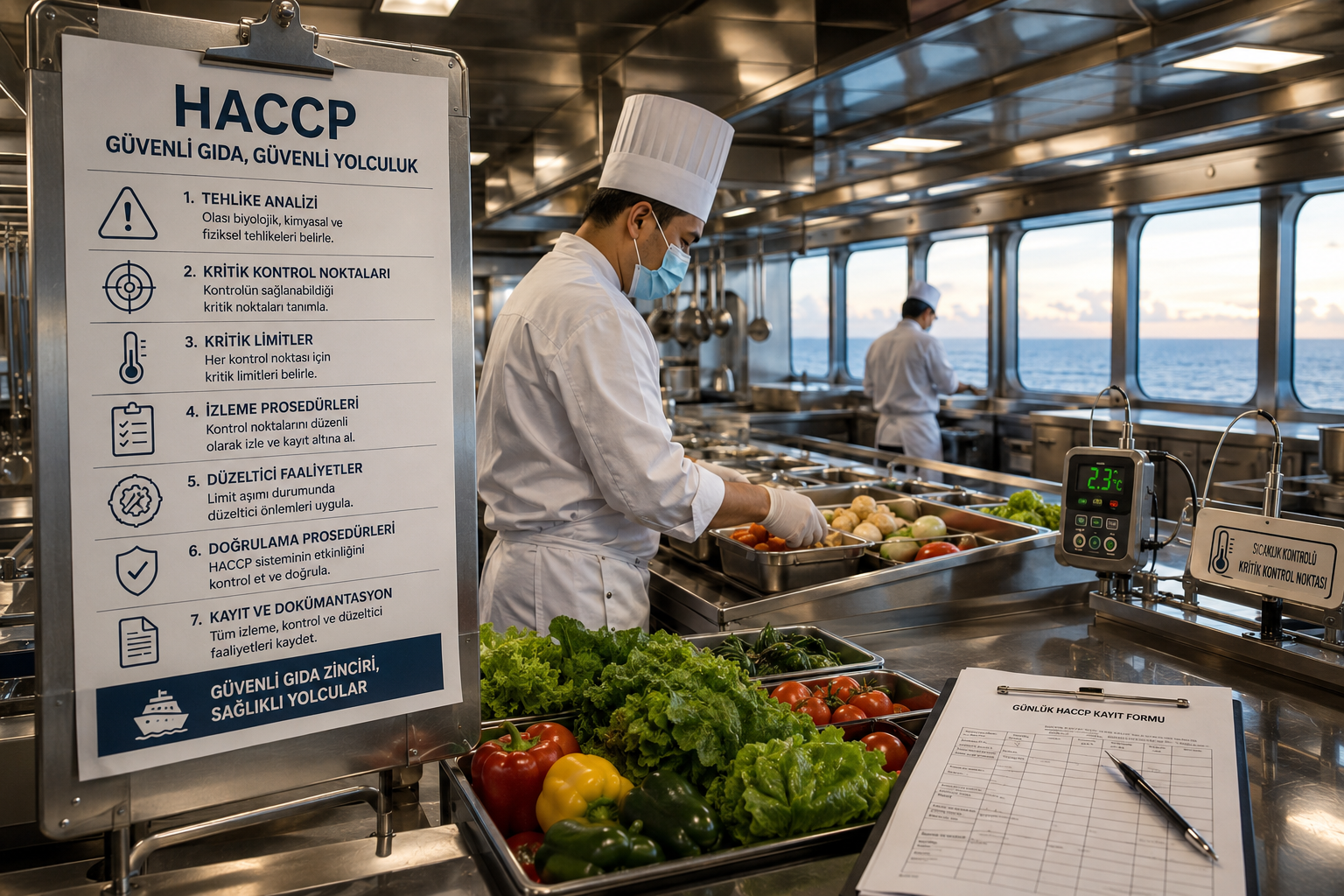
Ensuring Food Safety at Sea: Implementing HACCP in Cruise Ship Operations
The logistics of managing a floating city are staggering, and perhaps no department faces more scrutiny than the galley. On a modern cruise vessel, serving upwards of 20,000 meals a day is not just a culinary feat; it is a high-stakes public health operation. For organizations likeAVS Global Ship Supply and Management, the priority remains unwavering: ensuring that every link in the maritime supply chain adheres to the highest safety protocols. At the heart of this effort is Hazard Analysis and Critical Control Points (HACCP).
What is HACCP in Cruise Ship Environments?
In the maritime context, HACCP is a systematic, preventative approach to food safety that identifies biological, chemical, and physical hazards in production processes before they occur. Unlike traditional "snapshot" inspections that look at a finished product, HACCP monitors the entire lifecycle of food—from the moment it leaves international cruise food & hotel suppliers to the moment it is plated for a passenger in the middle of the Atlantic.
For cruise ships, the environment is unique. Unlike land-based restaurants, a ship is a closed ecosystem. An outbreak of foodborne illness can spread rapidly and has no "exit" until the next port of call. Therefore, implementing HACCP is not merely a regulatory requirement; it is the backbone of operational viability and brand reputation.
The Seven Core Principles of Hazard Analysis and Critical Control Points (HACCP)
To understand how food safety is maintained at sea, one must look at the seven-pillar framework that governs every galley and storage locker.
1. Conduct a Hazard Analysis
This is the foundational step. Shipboard safety officers and suppliers evaluate where hazards might be introduced. In maritime logistics, this includes analyzing the risks of cross-contamination during port loading, temperature fluctuations in humid tropical climates, and the potential for spoilage during long-haul voyages.
2. Identify Critical Control Points (CCPs)
A CCP is a point, step, or procedure at which control can be applied to prevent, eliminate, or reduce a food safety hazard to an acceptable level. Common CCPs on cruise ships include:
-
Receiving: Inspecting goods from suppliers at the pier.
-
Storage: Maintaining specific freezer and chiller temperatures.
-
Cooking: Ensuring internal temperatures reach safety thresholds.
3. Establish Critical Limits
For every CCP, a "critical limit" must be set. For example, if the CCP is cold storage for poultry, the critical limit might be staying at or below 4°C (40°F). If the temperature rises above this, the safety of the product is compromised.
4. Establish Monitoring Procedures
Monitoring involves planned observations or measurements to assess whether a CCP is under control. On modern vessels, this often involves automated sensors that log temperatures every minute, providing a digital paper trail for auditors.
5. Establish Corrective Actions
What happens when a limit is exceeded? If a refrigerator fails, the corrective action protocol dictates whether the food can be moved, quickly processed, or must be discarded. This removes the "guesswork" from high-pressure galley environments.
6. Establish Verification Procedures
Verification ensures the HACCP system is working as intended. This involves calibrating thermometers, reviewing monitoring logs, and conducting independent audits of the food supply chain.
7. Establish Record-Keeping and Documentation
In the eyes of maritime authorities like the CDC’s Vessel Sanitation Program (VSP), if it wasn't documented, it didn't happen. Comprehensive records of every delivery, temperature check, and corrective action are mandatory.
The Role of International Cruise Food & Hotel Suppliers
Food safety does not begin in the ship’s galley; it begins at the warehouse of the supplier. International cruise food & hotel suppliers act as the first line of defense. When a ship docks for "turnaround day," thousands of pallets are loaded in a matter of hours.
Reliable ship supply management ensures that the cold chain remains unbroken during this transition. Suppliers must provide "Certificate of Analysis" (COA) documents and prove that their own facilities are HACCP-compliant. For AVS Global, this means rigorous vetting of sub-vendors and utilizing climate-controlled logistics to ensure that fresh produce, meats, and dairy arrive at the pier in peak condition, regardless of the port’s local infrastructure.
Conclusion: A Culture of Safety
Ensuring food safety at sea is a monumental task that requires the synchronization of ship owners, crew members, and global logistics partners. By implementing the seven principles of HACCP, cruise operations move from a reactive "inspection" mindset to a proactive "prevention" mindset. As the industry grows, the collaboration between vessels and their international cruise food & hotel suppliers will remain the most critical ingredient in the recipe for passenger health and satisfaction.
Frequently Asked Questions (FAQs)
Q1: What are the most common food safety risks on cruise ships?
The most common risks include Norovirus, Salmonella, and E. coli. These are typically managed through strict hand-washing protocols, temperature control (HACCP), and rigorous sanitization of high-touch surfaces.
Q2: How often are cruise ships inspected for food safety?
Cruise ships operating in U.S. waters are subject to unannounced inspections twice a year by the CDC’s Vessel Sanitation Program (VSP). Similar programs, like EU SHIPSAN, conduct inspections in European waters.
Q3: What is the role of a ship chandler in HACCP?
A ship chandler or supplier is responsible for the "Pre-CCP" phase. They must ensure that food is sourced from approved facilities, maintained at correct temperatures during transit to the port, and delivered with full traceability documentation.
Q4: How does HACCP differ on a ship versus a land-based restaurant?
While the principles are the same, the "Critical Limits" on a ship are often stricter due to the high volume of diners and the inability to easily resupply or evacuate passengers in the event of a mass illness.
Q5: Can HACCP technology help reduce food waste at sea?
Yes. By closely monitoring temperature and shelf-life through HACCP record-keeping, galley managers can better manage inventory, ensuring food is used while fresh and reducing the amount of spoiled goods that must be offloaded.