

 Global:Global:
The global maritime industry relies on an intricate web of logistics, engineering, and strict compliance protocols to keep supply chains moving safely across international waters. Operating a modern merchant vessel involves managing immense physical forces, complex mechanical systems, and strict regulatory environments. To safeguard assets, cargo, and human life, the industry depends on rigorous technical benchmarks. For comprehensive maritime partners like AVS Global Ship Supply and Management, understanding and anticipating these stringent demands is critical to supporting fleet operational readiness. Two pillars form the bedrock of this technical safety framework: the oversight of independent regulatory bodies and the utilization of a standardized global procurement language.
To comprehend how structural and operational integrity is maintained at sea, one must first look at the role of an independent regulatory body known as a classification society. A classification society of ship operations acts as an unbiased, third-party organization that establishes and applies technical standards for the design, construction, and life-cycle assessment of marine vessels. These societies, such as Lloyd's Register, the American Bureau of Shipping (ABS), and DNV, translate complex engineering principles into clear, enforceable rules that govern every stage of a ship’s existence.
During the initial design and construction phases, a classification society reviews ship drawings, engineering calculations, and metallurgical choices to ensure they comply with established safety rules. Class surveyors are physically present at shipyards to inspect the quality of welding, hull stress points, and the installation of primary machinery. A vessel cannot receive its class certificate—and by extension, cannot secure insurance or port entry clearance—without verifying that its structural blueprint can withstand the extreme environments of open-ocean transit.
A ship’s relationship with its classification society does not end at the shipyard. Throughout its operational life, a vessel undergoes a continuous regime of annual, intermediate, and major five-year special surveys. Surveyors inspect hull thickness, machinery wear, and safety systems to ensure the ship has not deteriorated below acceptable margins. Furthermore, these societies act as recognized organizations on behalf of flag states, verifying compliance with mandatory international conventions established by the International Maritime Organization (IMO), including SOLAS (Safety of Life at Sea) and MARPOL (Marine Pollution Prevention).
Effective management of ship technical services requires seamless communication among shipboards crews, port authorities, superintendent engineers, and global ship chandlers. Because crews are frequently multinational, a precise mastery of specialized maritime terminologies is essential to prevent operational errors and misunderstandings during critical maneuvers or maintenance windows.
Communication begins with standard directional and spatial definitions. Port and starboard refer to the left and right sides of the vessel when facing forward, eliminating confusion regardless of a crew member's physical orientation. The hull represents the watertight body of the ship, which is divided internally by bulkheads—vertical walls that provide structural strength and create watertight compartments to prevent progressive flooding. The draft measures the vertical distance from the keel (the bottom-most structural spine of the ship) to the waterline, indicating the minimum depth of water necessary for safe navigation.
Beyond basic layout terms, technical operations rely on precise nomenclature for stability and cargo management. Freeboard is the distance from the waterline to the upper deck, representing the safety margin against swamping. The superstructure refers to the parts of the ship that extend above the main deck, housing the bridge, living quarters, and navigating controls. When technical teams request replacement parts for structural components, a shared vocabulary ensures that terms like "gudgeons," "scuppers," or "ullage spaces" are interpreted identically by both the chief engineer on board and the procurement specialist on land.
When a vessel requires technical components or provisions, vague descriptions can lead to costly delays. A ship might be docking in a foreign port for only a few hours, leaving no room for error in the supply chain. This is where standardized coding systems become vital. Understanding what IMPA means is fundamental to modern maritime commerce. IMPA stands for the International Marine Purchasing Association, and its primary contribution to global shipping is the creation of a universal, standardized database of marine products.
The IMPA Marine Stores Guide reduces thousands of technical descriptions, measurements, and variations into a simple, universally recognized six-digit coding system. For instance, rather than describing a highly specific pneumatic valve or a precise grade of deck tool in text that could be lost in translation across different languages, a buyer simply submits the unique IMPA code. This numerical shorthand instantly informs suppliers of the exact specifications, dimensions, and materials required, completely removing language barriers from the supply chain.
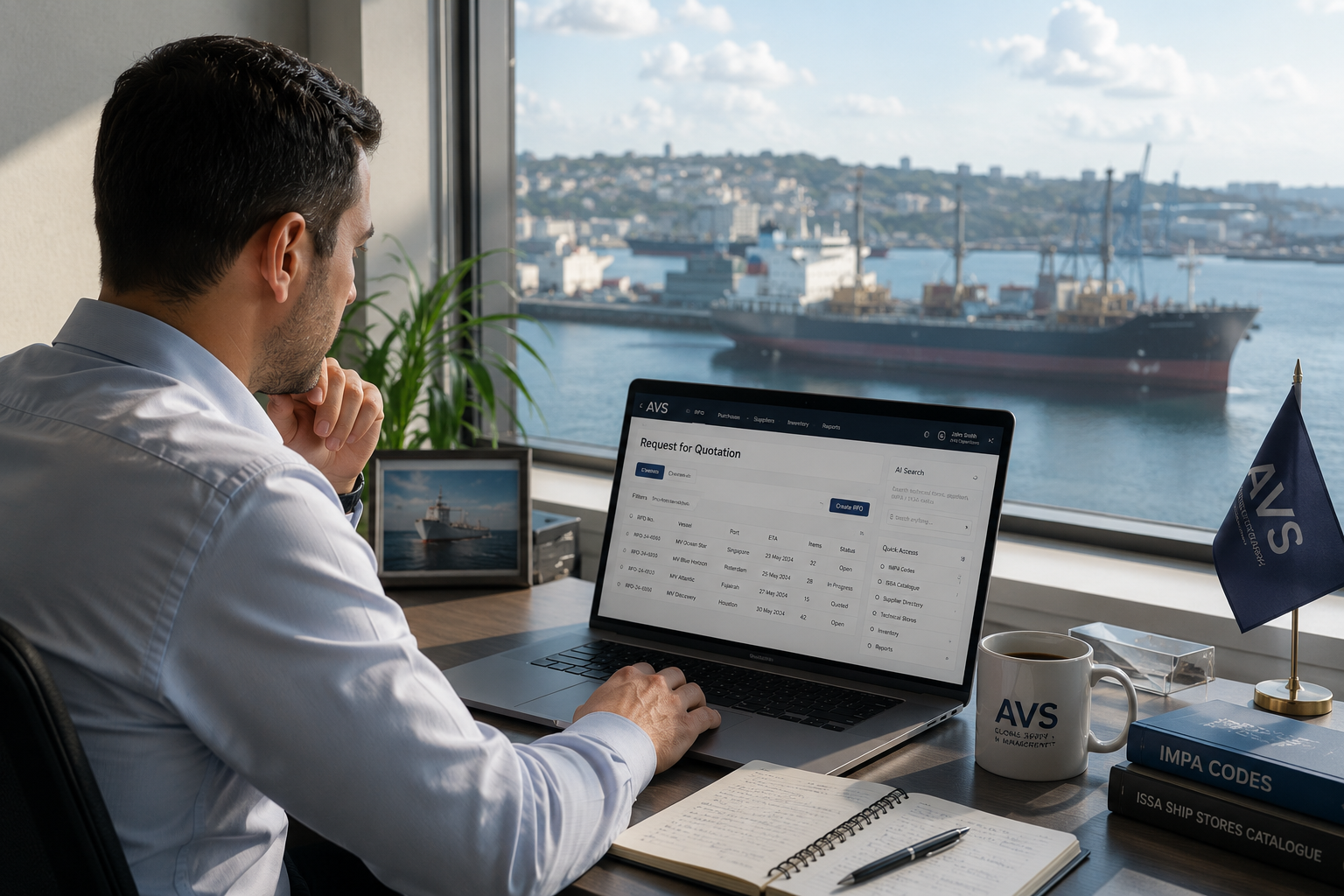
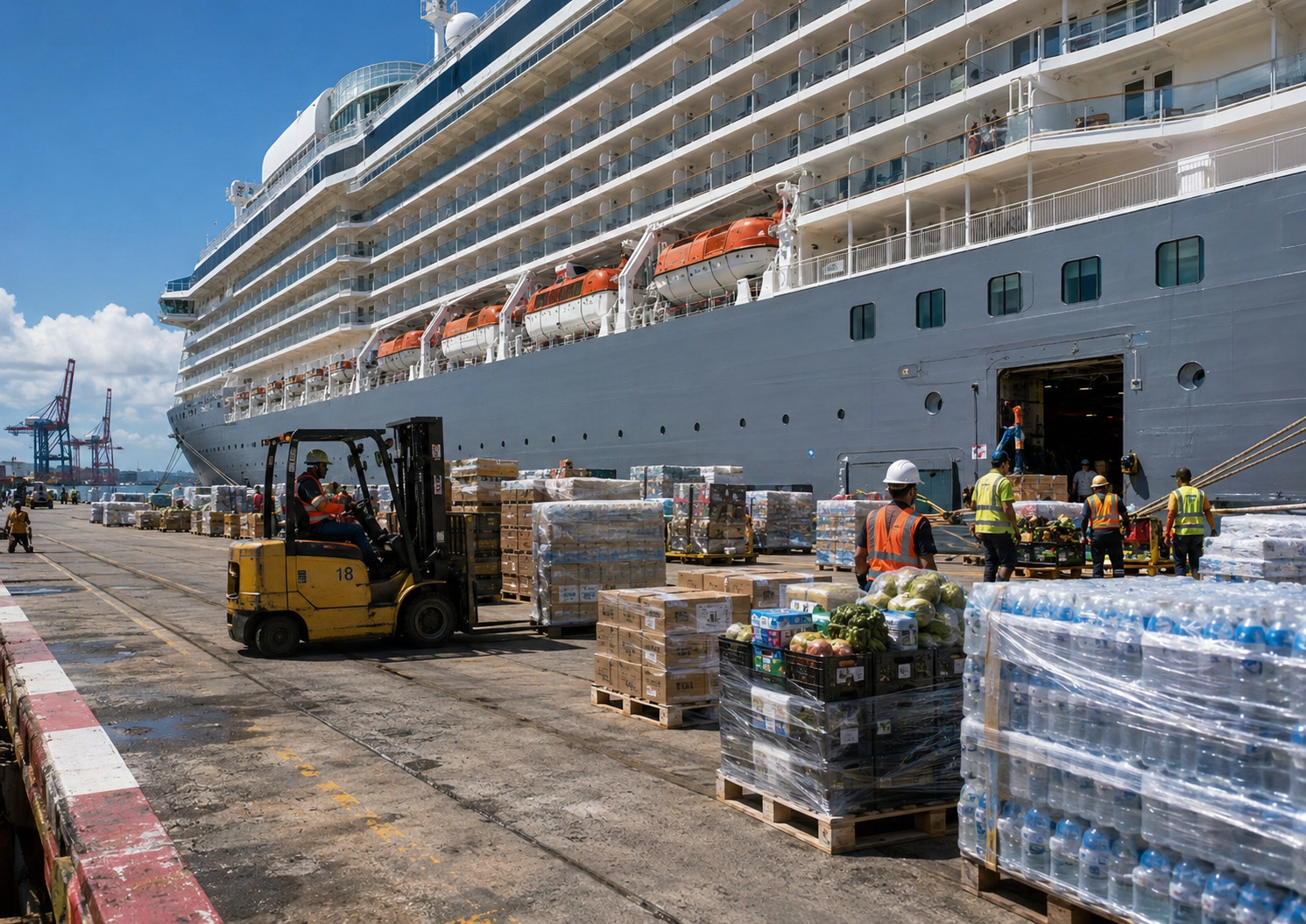
By acting as a standardized language, IMPA codes allow procurement officers on land to handle requests from vessels anywhere in the world with absolute precision. When an engine room crew requests tools, electrical consumables, or mechanical fasteners, the IMPA system ensures that the item delivered matches the engineer’s technical requirements. For a global supplier, this means requests for quotations can be processed rapidly, ensuring that the correct technical stores are picked, packed, and delivered to the pier before the vessel’s departure.
The true value of classification oversight, precise maritime terminology, and standardized coding converges during intensive maintenance periods and routine ship repair services. Whether a vessel is undergoing a scheduled drydocking or requiring emergency afloat repairs, coordination between multiple stakeholders must be executed with clockwork efficiency.
Every few years, ships must enter a drydock facility where the underwater hull can be exposed, cleaned, and inspected by classification society surveyors. This process demands a meticulous breakdown of repair specifications. Superintendent engineers rely on exact maritime terminologies to describe hull plating renewals, propeller shaft re-alignments, or rudder bearing replacements to shipyard workers. Every technical store, specialized coating, and spare parts kit needed for these repairs is ordered months in advance using IMPA codes to ensure compatibility with existing onboard machinery.
During ship repair services, every hour the vessel remains out of service represents significant financial loss for the shipowner. Sourcing partners must synchronize deliveries perfectly with the shipyard's schedule. If a classification surveyor identifies an unexpected defect during a routine inspection, the replacement parts must be sourced, verified, and delivered immediately. Utilizing an integrated approach that respects technical standards ensures that the maritime supply chain remains resilient, keeping vessels compliant, safe, and commercially viable across the globe.
What is the main purpose of a classification society of ship operations?
The main purpose of a classification society is to verify that a ship is designed, constructed, and maintained in accordance with strict structural and mechanical engineering standards. This independent verification ensures the vessel's safety, seaworthiness, and compliance with international maritime regulations.
Why is it important to use standardized maritime terminologies on board?
Standardized maritime terminologies ensure clear, unambiguous communication among multinational crews, shore-based management, and port authorities. Precise terms prevent misunderstandings that could lead to operational errors, accidents, or delays during navigation and maintenance.
What does IMPA mean in the context of marine purchasing?
IMPA stands for the International Marine Purchasing Association. In marine purchasing, it refers to the standardized six-digit coding system used globally to identify and order ship stores, technical equipment, and provisions without language barriers.
How do classification standards affect routine ship repair services?
Classification standards dictate the quality of materials, welding techniques, and component specifications that must be used during ship repair services. All major repairs must be surveyed and approved by a class representative to maintain the vessel's validity certificates.
What is the difference between a flag state inspection and a classification survey?
A flag state inspection is conducted by or on behalf of a country's maritime authority to enforce national and international legal laws. A classification survey focuses specifically on the technical, structural, and mechanical integrity of the vessel based on the society's engineering rules.

Bilinmiyor