

 Global:Global:
Marine buyer negotiation tactics are different from ordinary purchasing techniques. In ship supply, buyers are not only negotiating price. They are also negotiating time, reliability, documentation, quality, stock position and operational risk.
For buyers, procurement officers and junior procurement staff, negotiation in marine procurement requires a practical mindset. A cheaper quote is not always the best quote if the supplier cannot deliver before vessel departure, cannot provide certificates, cannot handle urgent communication or cannot meet the required quality level.
Ship supply negotiation is about finding the best total outcome for the vessel, not only the lowest unit price. Lead time, MOQ, documentation, payment terms, Incoterms and supplier reliability all affect the real cost of a purchase.
At AVS Global Ship Supply & Catering, we support ship managers, procurement teams and vessel operators with global ship supply, technical stores, provisions, bonded stores and coordinated marine procurement solutions across international ports. For broader vessel supply services, see Global Ship Supply.
Marine procurement is shaped by vessel schedules, port restrictions, urgent requirements and limited delivery windows. In industrial procurement, buyers may have more stable demand, longer planning cycles and fixed delivery locations. In ship supply, the vessel may sail before the supplier can correct a mistake.
This changes the negotiation process. A marine buyer must consider operational feasibility before pushing only for lower price.
Many ship supply orders are time-sensitive. A buyer may need provisions, technical stores, spare parts, chemicals or bonded stores before a vessel leaves port. If the supplier misses the delivery window, the purchase may become useless even if the price was competitive.
This is why lead time is one of the most important negotiation points in marine supply.
Buyers should negotiate around:
The best negotiation result is not always the lowest price. It is the supplier offer that meets the vessel’s real operational requirement.
In marine procurement, price must be compared together with delivery reliability, documentation, product quality and supplier responsiveness.
A low-priced supplier may create hidden costs if they deliver late, send incomplete items, miss certificates, provide unclear documentation or fail to communicate during urgent delivery.
A stronger supplier may cost slightly more but reduce risk and save time.
Marine buyers should evaluate the total value of the quotation, not only the unit price.
Negotiation outcomes are often better when the supplier relationship is strong. Suppliers may prioritize buyers who communicate clearly, pay on time, provide accurate specifications and treat the relationship as long-term cooperation.
This does not mean buyers should accept weak pricing. It means buyers can often negotiate better lead times, flexibility and support when the supplier trusts the buyer and understands the account potential.
For a broader view of sourcing and supplier coordination, see Global Procurement.
Strong negotiation starts before the buyer speaks to the supplier. Buyers need data, market knowledge and internal clarity before asking for better price, shorter lead time or improved terms.
Without preparation, negotiation becomes a simple discount request. With preparation, the buyer can explain why the request is reasonable and what trade-offs are possible.
Before negotiating with a supplier, buyers should review:
This information gives the buyer a stronger position.
Benchmarking means comparing the supplier offer with other available data. This may include past orders, other supplier quotes, market prices, frame agreement prices or similar port supply records.
Benchmarking helps buyers understand whether the offer is fair.
However, buyers should avoid comparing only price. A quote with a lower unit cost may not include documentation, inland delivery, packaging, customs support or urgent handling.
A proper benchmark should compare the full offer, including:
Many procurement teams ask for three quotes as a standard rule. This can be useful, but it should not become a mechanical process.
Three quotes are valuable when the item is standard, time allows comparison and multiple qualified suppliers are available. But in urgent ship supply, waiting for three quotes may create operational risk.
Buyers should know when full competition is needed and when speed, reliability and technical accuracy are more important.
Lead time is one of the most important negotiation areas in marine procurement. A supplier may offer a good price, but if the product cannot reach the vessel on time, the offer may not be useful.
Lead time negotiation should focus on the supplier’s real stock position, preparation capability and delivery feasibility.
Suppliers may say an item is “available,” but availability can mean different things. It may mean the item is in their own warehouse, with a sub-supplier, available from the manufacturer or available after import.
Buyers should clarify:
This prevents misunderstanding and helps the buyer negotiate based on facts.
When a vessel deadline is tight, buyers can negotiate faster delivery by offering clear information.
Helpful details include:
A supplier can respond faster when the buyer gives complete information early.
Shorter lead time may require trade-offs. The buyer may need to accept a higher price, a local alternative, partial delivery, different packaging or a different brand.
Practical trade-offs may include:
Good negotiation does not only pressure the supplier. It creates workable options.
MOQ, or Minimum Order Quantity, is a common negotiation point in ship supply. Suppliers may require a minimum quantity because of packaging, production, stock policy or transport cost.
Marine buyers should handle MOQ differently depending on the product category.
Consumables are often easier to negotiate because they are frequently used and may be ordered again. Examples include cleaning materials, PPE, ropes, tapes, brushes, galley consumables, chemicals, tools and standard technical items.
For consumables, buyers can negotiate MOQ by offering:
If the supplier sees future volume, they may be more flexible on MOQ.
Spare parts are more difficult. Some spare parts are specific to maker, model or equipment. Suppliers may not want to split sets, open packaging or hold remaining stock.
For spare parts, buyers should be careful. Reducing MOQ may not always be possible if the supplier must buy the item from a manufacturer in a fixed pack size.
In these cases, buyers can negotiate:
MOQ reduction is not always the right decision. If the vessel will use the item regularly, buying the full quantity may reduce future urgent orders.
Buyers should consider:
The best MOQ negotiation balances cost, operational need and future usability.
Quality and documentation should be part of negotiation from the beginning. If buyers negotiate only price and delivery time, problems may appear later during inspection, delivery or invoice approval.
Marine buyers should clearly state what quality level and documents are required before confirming the order.
Suppliers cannot always guess what quality level the vessel expects. Buyers should provide clear specifications, especially for technical stores, spare parts, chemicals, safety items and provisions.
Quality details may include:
Clear specifications reduce disputes and help suppliers quote accurately.
For important or urgent orders, buyers may request inspection before dispatch. This may include photos, packing confirmation, certificate check or quantity confirmation.
Inspection is especially useful for:
Inspection does not need to be complicated. Even simple photo confirmation can prevent wrong deliveries.
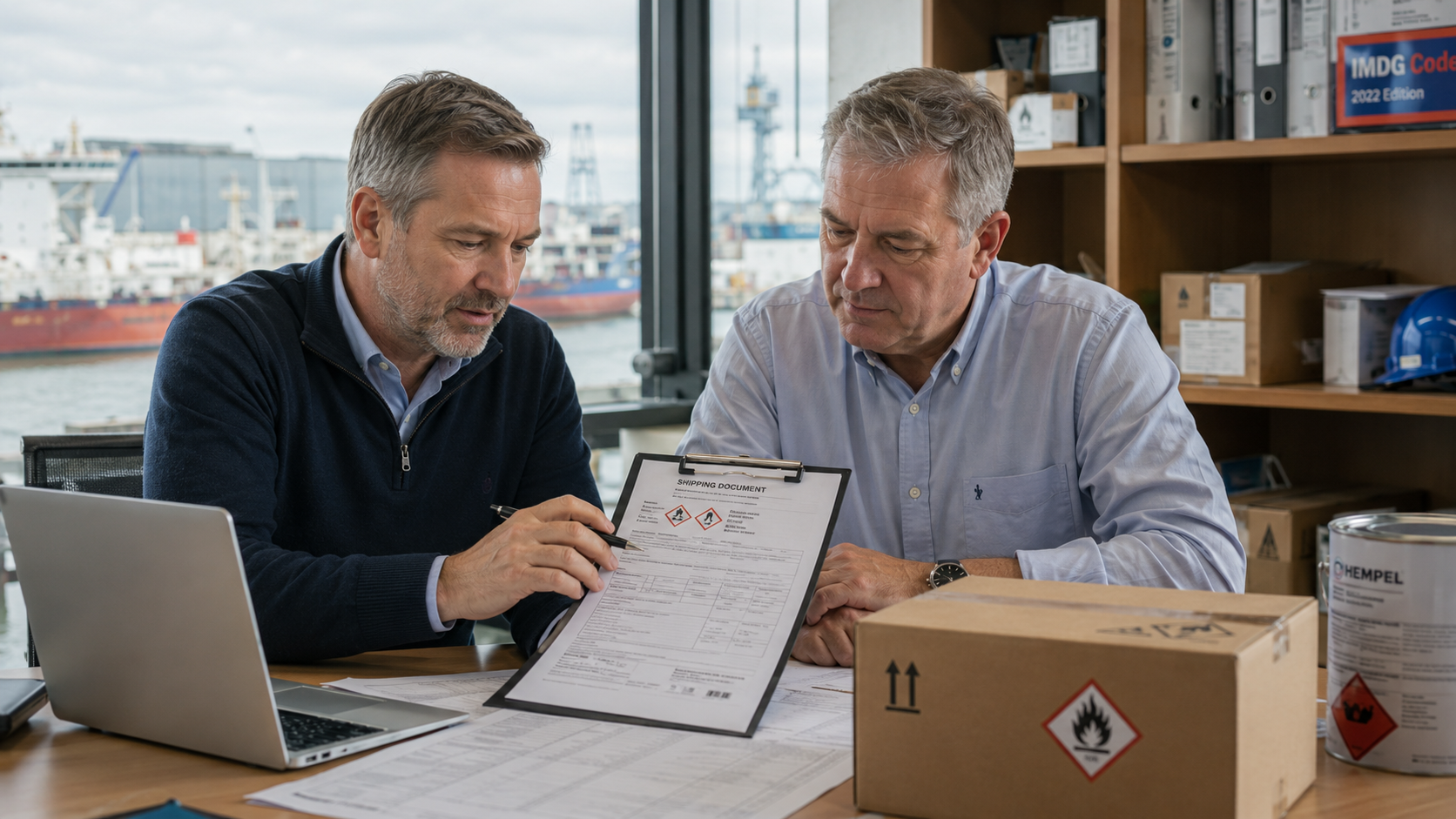
Documentation is a major negotiation point in marine procurement. A supplier may offer a product, but if they cannot provide the required certificate, SDS, warranty document or delivery note, the offer may not meet the vessel’s requirement.
Buyers should clarify documentation needs before purchase order.
Common documentation requirements include:
Documentation should not be treated as an afterthought. It should be part of the negotiated scope.
If the supplier says documents are not available, buyers should ask whether alternatives exist.
This may include:
For critical items, buyers should confirm with the technical team before accepting any documentation change.
Commercial terms can affect the real cost of a marine supply order. Currency, Incoterms and payment terms should be reviewed together with price and delivery.
Junior buyers often focus on unit price, but experienced buyers know that commercial terms can change the final cost and risk.
Marine suppliers may quote in USD, EUR, GBP, TRY or local currency depending on location and product source. Currency movements can affect both buyer and supplier.
Buyers should consider:
For urgent orders, currency may not be negotiable. For larger or repeated purchases, currency terms can become an important negotiation point.
Incoterms define delivery responsibilities, cost allocation and risk transfer between buyer and seller. In ship supply, Incoterms should be used carefully because port delivery can involve local handling, customs, launch boat, agent coordination and vessel-specific instructions.
Buyers can negotiate Incoterms, but they must understand what is included.
Important questions include:
The right Incoterm depends on the shipment, supplier, port and logistics arrangement.
Payment terms affect supplier willingness, pricing and relationship. Some suppliers may offer better terms to trusted buyers. Others may require advance payment for urgent or high-value orders.
Common payment terms include:
Buyers should negotiate payment terms based on supplier risk, order value, urgency, company policy and relationship history.
A supplier may offer a lower price with strict payment terms or a higher price with better credit terms. Buyers should compare the full commercial value.
Negotiation should not isolate one factor. Price, currency, Incoterms and payment terms must be reviewed together.
Marine procurement negotiation can fail when buyers focus too narrowly on price or move too quickly without confirming details. Many problems are avoidable with clearer communication and better preparation.
If the specification is unclear, the price comparison may be meaningless. Two suppliers may quote different brands, different quality levels or different documentation scopes.
Buyers should confirm specification first, then negotiate price.
A low price is not useful if the supplier cannot meet the vessel delivery window. Buyers should always check real stock, dispatch timing and port delivery feasibility before confirming the order.
Suppliers may offer equivalent products, but not every alternative is acceptable. Buyers should request technical details, datasheets, certificates and photos before accepting substitutes.
For technical or critical items, approval should come from the responsible technical team.
Documentation problems often appear after the purchase order. This creates delays and disputes.
Buyers should include documentation requirements in the RFQ and PO from the beginning.
If every request is marked urgent, suppliers may stop treating urgency seriously. Buyers should communicate real priority levels.
For critical vessel operations, urgency should be clear and supported with vessel ETA, ETD and delivery cut-off.
Hard negotiation can reduce price once but damage long-term cooperation. Marine buyers need suppliers who respond during emergencies, clarify technical details and support difficult port deliveries.
The best negotiations are firm but professional. Buyers should push for value without damaging trust.
AVS supports procurement teams by coordinating vessel requirements, sourcing from suitable suppliers, checking availability, clarifying documentation needs and helping align delivery planning with vessel schedules.
For ship supply requirements, urgent vessel needs or procurement support, use Quick Quote.
Marine buyer negotiation tactics should focus on total value, not only price. A successful negotiation balances cost, lead time, MOQ, quality, documentation, payment terms and operational risk.
In ship supply, the best deal is the one that reaches the vessel correctly, on time and with the documents required. A cheaper offer can become expensive if it causes delay, rework, missing certificates or wrong delivery.
For buyers, procurement officers and junior procurement staff, negotiation becomes stronger with preparation, benchmarking, clear specifications and supplier relationship management.
AVS Global Ship Supply & Catering supports ship managers and procurement teams with global ship supply, provisions, technical stores, bonded stores and coordinated vessel supply solutions across international ports.
For marine procurement and vessel supply requests, use Quick Quote.
The most important factor is total operational value. Price matters, but lead time, delivery reliability, quality, documentation and supplier responsiveness are also critical in marine procurement.
Buyers should confirm real stock position, vessel ETA, delivery cut-off, packing time and port delivery feasibility. Faster delivery can sometimes be negotiated by accepting local stock, partial delivery or approved alternatives.
No. MOQ cannot always be reduced, especially for spare parts, manufacturer pack sizes or special-order items. However, buyers can negotiate mixed orders, future demand, fleet-wide usage or supplier-held balance stock.
Three quotes are useful when time allows and multiple qualified suppliers are available. In urgent ship supply, waiting for three quotes may create operational risk, so buyers should balance competition with vessel requirements.
Buyers should include documentation requirements in the RFQ and purchase order. If a supplier cannot provide a document, the buyer should ask for acceptable alternatives and confirm with the technical team when needed.
Frame agreements create clearer commercial terms, service levels, documentation expectations and supplier performance standards. They can reduce repeated negotiation and improve consistency across recurring ship supply orders.
Currency fluctuations can affect final cost, quote validity and supplier pricing. Buyers should check quote currency, exchange rate validity, payment timing and whether freight or local charges are quoted separately.
Yes. Buyers can negotiate Incoterms, but they must understand what is included in delivery, customs, port handling, launch boat delivery and risk transfer. The best term depends on supplier capability and vessel delivery conditions.
Red flags include vague stock confirmation, unclear alternatives, missing documents, unusually low prices, slow communication, refusal to confirm delivery timing and inconsistent product details.
Strong supplier relationships can improve negotiation outcomes because trusted buyers may receive better support, faster response, flexible terms and priority handling during urgent vessel requirements.
Buyers should be careful with target prices. In some cases, a target price can help close a deal, but revealing it too early may limit negotiation leverage. It is usually better to benchmark first and negotiate based on value.
AVS works with sub-suppliers by clarifying vessel requirements, checking availability, comparing commercial and technical details, confirming documentation needs and coordinating delivery expectations to support reliable ship supply.

Bilinmiyor