

 Global:Global:
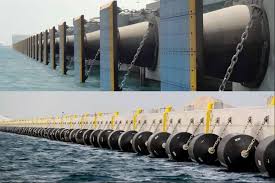
The sheer scale and momentum of modern commercial vessels make port approaches and side-by-side mooring operations some of the most logistically demanding phases of a voyage. When a fully laden container ship, oil tanker, or bulk carrier moves toward a concrete quay wall or a floating terminal, it carries massive amounts of kinetic energy. Controlling this force during physical contact is critical to preventing structural failure. Marine bumper systems act as the primary interface between a vessel's hull and port infrastructure. For port authorities, fleet managers, and marine engineers, selecting the ideal structural bumper is a key engineering decision. Understanding how these systems absorb impact energy ensures long-term protection for both multi-million dollar hulls and maritime harbor walls.
Maritime operations use a variety of specialized bumper geometries to match different hull profiles, tidal ranges, and environmental stresses. To choose the right layout, engineers must analyze how different options absorb energy and resist compression. These options range from high-pressure air systems to solid polymer setups.
Pneumatic systems are considered the gold standard for high-capacity energy absorption, particularly during ship-to-ship (STS) transfer operations or in ports with extreme tidal variations. Filled with high-pressure compressed air, a pneumatic ship fender utilizes the natural elasticity of air to distribute impact forces evenly across a wide hull surface. This minimized surface pressure protects relatively thin hull plating from localized deformation. Top-tier pneumatic options are wrapped in a protective chain-tire net composed of recycled truck tires and heavy-duty chains, which provides exceptional resistance to shear forces and tearing during heavy weather swells.
For operations where zero-downtime reliability is mandatory, foam-filled systems offer an excellent alternative to air-insulated designs. These units feature a dense, energy-absorbing closed-cell foam core wrapped in a tough polyurethane skin. The primary advantage of a foam-filled setup is its complete resistance to puncture; even if the outer skin is cut by sharp hull projections or rough docks, the internal closed-cell structure cannot absorb water or lose its shape. This design maintains steady protection throughout severe mooring exposures.
Fixed port infrastructure typically utilizes solid molded rubber systems to handle direct, perpendicular approaches. Cone and cell models provide excellent energy absorption per unit volume, utilizing unique geometric shapes that buckle smoothly under high loads to prevent sharp reaction forces against the vessel's hull. Arch and cylindrical configurations offer simple, durable protection, making them ideal for multi-purpose cargo quays handling a wide mix of coastal vessels and support tugboats.
Because these safety systems operate under intense physical stress, purchasing managers must look beyond simple upfront cost metrics when vetting global suppliers. Evaluating premium marine fenders manufacturers requires a strict analysis of raw material quality, manufacturing methods, and official type-approval certifications.
The operational lifespan of a bumper depends entirely on the compound quality of its base elastomers and internal structural components. Sourcing specialists must verify that a supplier uses premium, non-reclaimed rubber compounds enhanced with anti-ozonant and ultraviolet-stabilized chemicals to prevent weathering cracks in high-salinity, high-temperature environments. Furthermore, all internal steel mountings, chains, and shackles must undergo hot-dip galvanization or be fabricated from high-grade marine alloys to prevent deep rust damage caused by continuous contact with oxygenated sea spray.
A reliable manufacturing partner must provide independent validation showing full compliance with international engineering guidelines. The core quality standard for pneumatic designs is ISO 17357, which dictates strict testing rules for material strength, air retention, and hydrostatic pressure tolerances. Furthermore, manufacturers should supply formal type-approval certificates validated by recognized classification societies like DNV, Lloyd's Register, or the American Bureau of Shipping (ABS), confirming that the products deliver verified performance ratings during unexpected operating loads.
The engineering physics behind bumper selection centers on balancing two key values: energy absorption (EA) and reaction force (RF). The goal is to maximize energy absorption while keeping the reaction force as low as possible to protect the ship's framing.
As a vessel presses into a bumper, the rubber or air core compresses, storing and dissipating the ship's forward kinetic energy. This compression generates a corresponding reaction force pushed directly back into the ship's side shell. If the reaction force climbs too rapidly over a small footprint, it can buckle internal ship structures like web frames and longitudinal stringers. Engineers use complex berthing velocity calculations to select a configuration that spreads this loading safely across the ship's strongest structural areas.
Real-world mooring maneuvers rarely occur at a perfect perpendicular angle. Strong crosswinds, tidal currents, and rolling wave motions cause ships to strike bumpers at acute angles, creating heavy shear forces that twist the bumper along its mounting base. Modern high-performance setups feature low-friction frontal pads made from ultra-high-molecular-weight polyethylene (UHMW-PE). These smooth panels allow the ship's side to slide easily across the face of the bumper during berthing, eliminating dangerous friction friction drag and protecting both the hull coating and the anchor bolts holding the terminal together.
What is the main engineering difference between pneumatic and foam-filled fenders in ship operations
Pneumatic systems utilize high-pressure compressed air inside a rubber casing to provide highly elastic energy absorption, making them excellent for rough ship-to-ship transfers. Foam-filled systems use a dense, solid closed-cell foam core that offers high energy absorption and remains completely unsinkable even if the outer skin is punctured.
Why is the ISO 17357 certification critical when evaluating marine fenders manufacturers?
ISO 17357 is the international quality benchmark for pneumatic rubber bumpers. It ensures that the manufacturer adheres to strict material testing, pressure safety limits, and construction guidelines, guaranteeing the asset will perform reliably without bursting under heavy operational compression.
How do ultra-high-molecular-weight polyethylene (UHMW-PE) pads protect the ship fender system?
UHMW-PE panels are mounted to the front faces of steel bumper frames to create a highly slick, low-friction surface. This slick surface allows a moving hull to slide smoothly across the face of the bumper, eliminating dangerous lateral shear stresses that could otherwise tear the rubber body from its anchoring base.
What causes a ship fender to fail prematurely in a maritime port environment?
Premature failures are generally caused by continuous over-compression during storms, structural ozone cracking from unprotected raw rubber compounds, high friction tearing due to missing low-friction facings, or deep corrosion on poorly galvanized mounting hardware.
How does a vessel's displacement influence the selection of port bumpers?
A vessel's deadweight tonnage and maximum displacement directly dictate the total kinetic energy generated during a berthing approach. Larger, heavier ships require configurations with significantly higher energy absorption ratings and larger contact surfaces to distribute the massive reaction forces safely across the hull.

Bilinmiyor